Skip to Main Content
← All Case Studies
LegalTech · RAG · Knowledge management

Femida KnowledgeOS — enterprise AI/RAG knowledge platform

Functional MVP

A corporate AI platform that processes documents, answers with citations, identifies contractual risks and turns each transaction into a manageable project.

Next.js 16FastAPIPostgreSQL 16Qdrant 1.12Celery + RedisMinIO
8document types
3OCR languages
4workspace roles
15 / 30JWT minutes / days
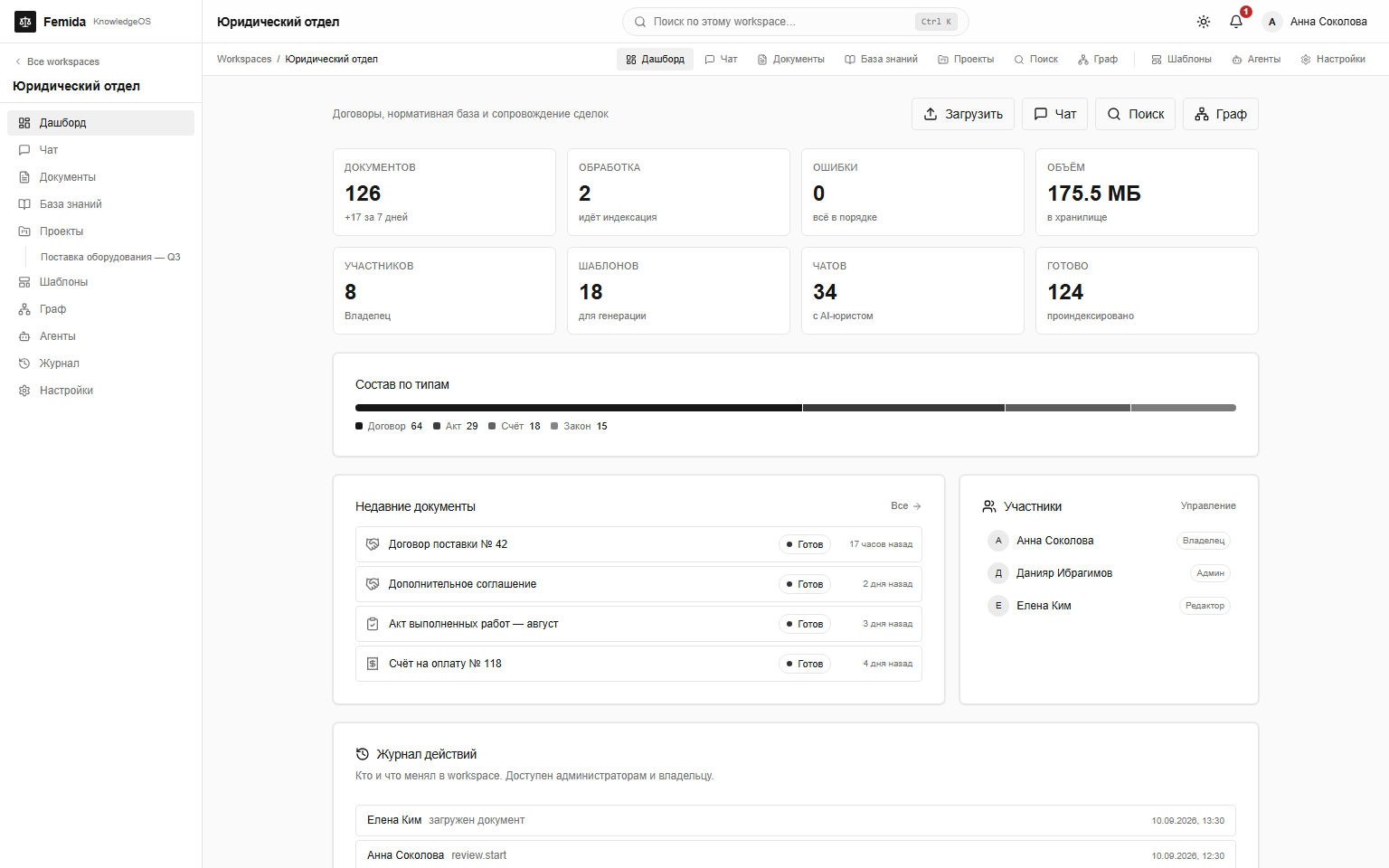
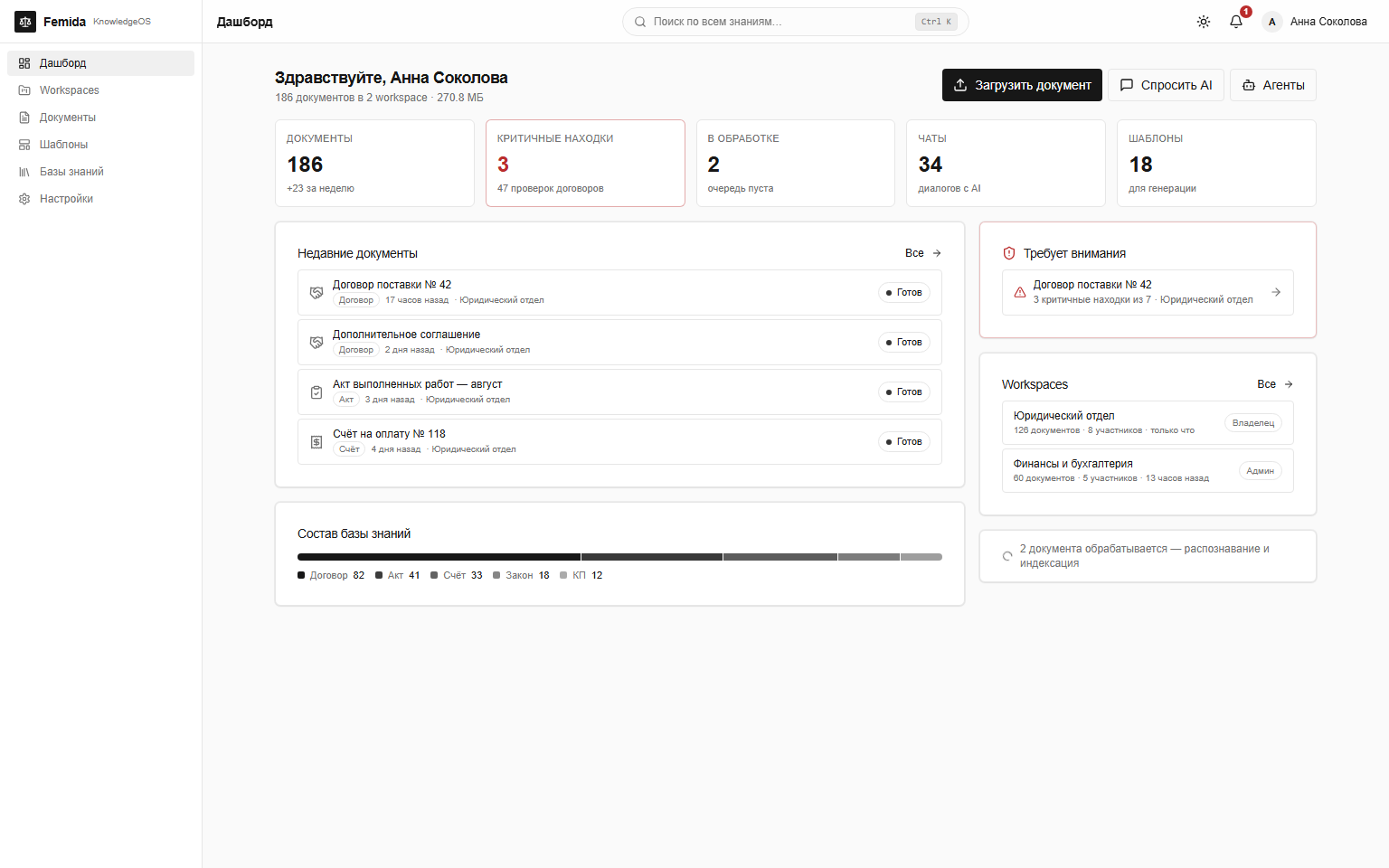
Main Dashboard — Femida KnowledgeOS
Main DashboardLive interface · actual product interface
01 / Context

The business loses time not because documents are missing, but because answers cannot be substantiated quickly

Contracts, acceptance certificates, invoices and policies are scattered across folders, email and messaging apps. Search depends on filenames and employee memory, and a generic AI answer is difficult to use for legal work without a page reference and quotation. We created a connected workflow taking documents from secure upload and OCR through search, risk analysis, tasks and closing documents.

Challenge
Make corporate knowledge accessible and verifiable
Solution
RAG search, AI contract analysis and execution tracking
02 / Pain Point → Solution

Resolved the key risks around trust, discoverability and delivery

01

Knowledge Depends on Individuals

Employees search for files by name or ask a colleague who remembers where the correct version is stored.

Our Solution

We organised documents by workspace, folder, collection and tag, and added hybrid keyword and semantic search.

02

AI Answers Cannot Be Verified

Users see a polished answer but cannot tell which document supports it.

Our Solution

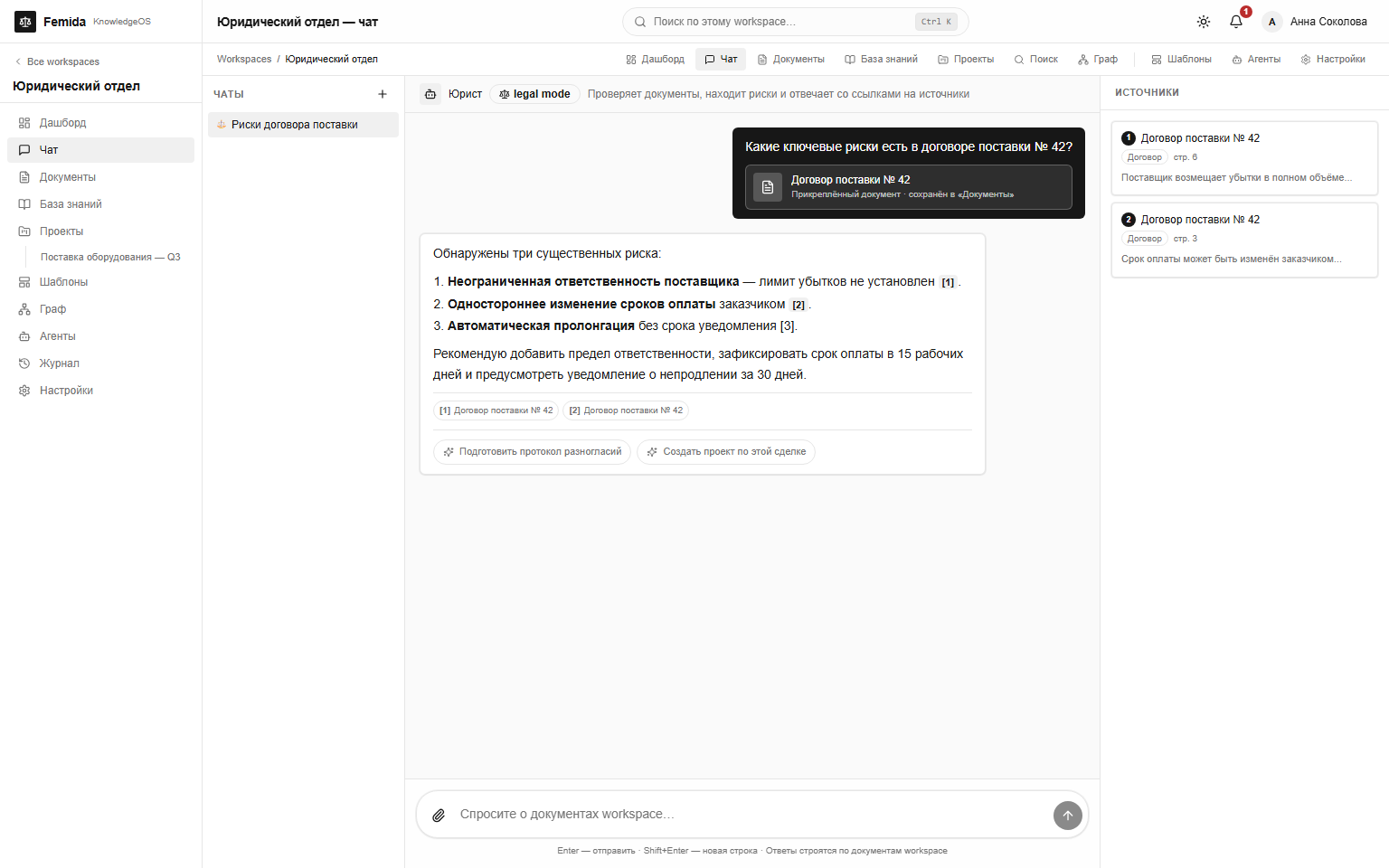
The RAG chat answers only from the available context and returns the document, page, quotation and relevant passage.

03

Risks Are Identified Too Late

Legal and financial terms still have to be checked manually immediately before signing.

Our Solution

AI review classifies each issue and displays the original quotation, recommendation, severity and processing status.

04

Control Breaks Down After Signing

Amounts, obligations, deadlines and completion documents are still managed in spreadsheets.

Our Solution

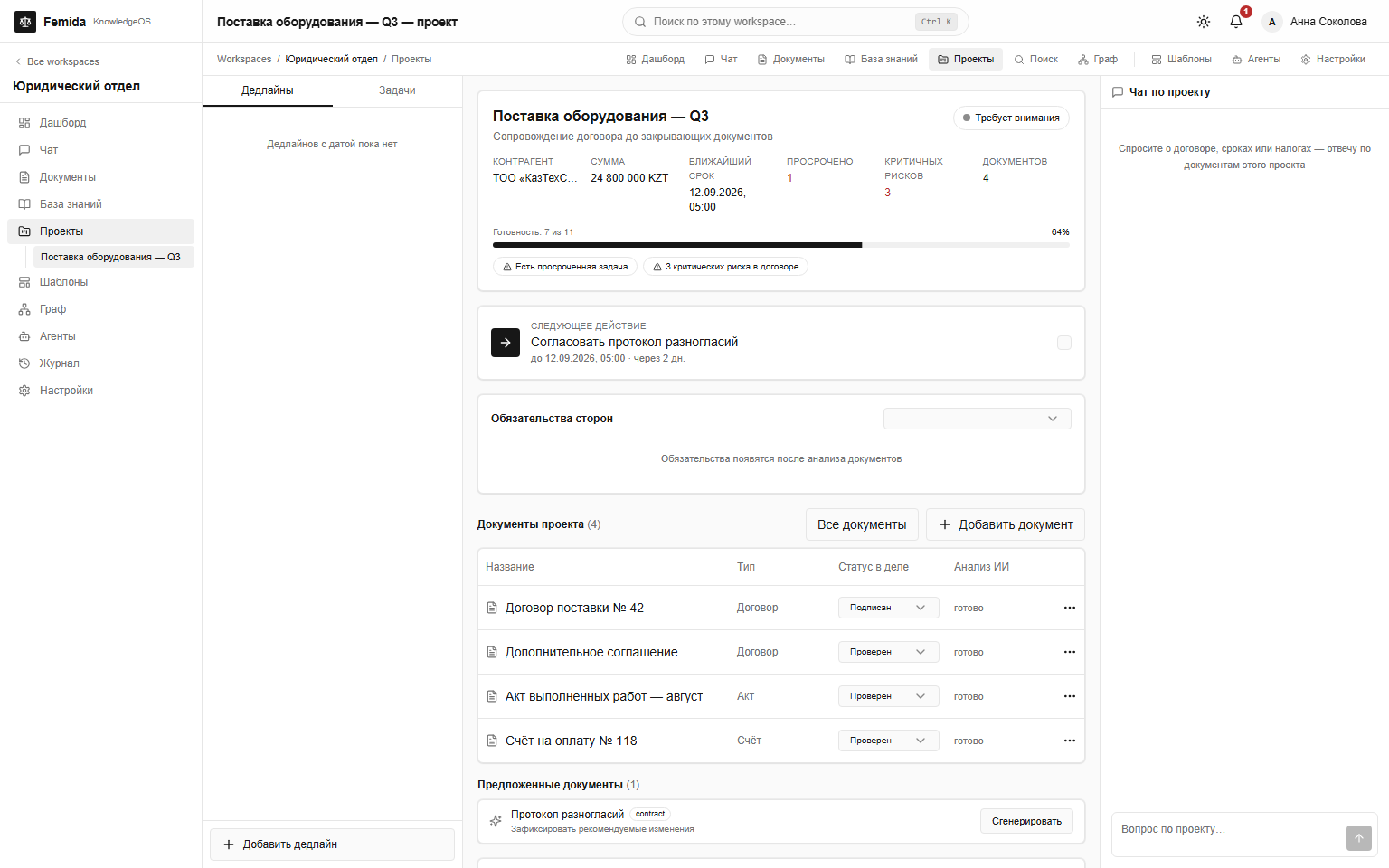
We turned a set of documents into a transaction project with progress tracking, owners, deadlines, risks and a clear next action.

03 / Information Architecture

The user journey is built around a meaningful task

File Upload→MIME + SHA-256→OCR / parsing→Chunks + embeddings→Hybrid retrieval→RAG / AI review→Project and Oversight

The architecture was verified using the supplied documentation, application structure and genuine product screens.

04 / Core UX

Users complete the entire document workflow within one workspace

A Celery worker extracts text from PDF, DOCX, XLSX, PPTX, HTML and images, applies OCR for RU/KZ/EN, classifies files and builds the index. Employees receive streaming chat answers with sources, while project views show managers amounts, obligations, risks, deadlines and the next action.

Verifiable AI Chat — Femida KnowledgeOS
Verifiable AI ChatStreaming response, citations, pages and source panel
Deal Management — Femida KnowledgeOS
Deal ManagementDocuments, amounts, progress, risks, deadlines and next action
05 / Content Model

Data isolation built into the product’s domain model

Workspace

Team Framework

Dedicated members, roles, documents and Qdrant collection

Document

File and Index

Original in MinIO, metadata in PostgreSQL, chunks in Qdrant

Finding

AI Review Finding

Severity, quote, recommendation and workflow status

Project

Deal

Parties, amount, obligations, deadlines, tasks and supporting files

Template

Document Generation

Variables, instructions, AI-assisted completion and DOCX/MD/HTML export

Entity graph

Knowledge Links

Organizations, BIN/IIN, contracts, completion certificates and document relationships

06 / Technology Stack

AI functions separated from storage, access and background processing

Next.js 16 + React 19TypeScript UI, Radix, TanStack Query, Zustand and assistant-ui
FastAPI + Python 3.12Pydantic, SQLAlchemy 2 Async, REST /api/v1 and OpenAPI
PostgreSQL 16Metadata, RBAC and tsvector full-text index
Qdrant 1.12 + FastEmbedA separate collection per workspace and local CPU embeddings
Celery + Redis 7Background OCR, classification, chunking and indexing
MinIO + S3 APIIsolated storage for original and generated documents
07 / Interactive Flows

The interface helps users complete tasks without unnecessary navigation

SSE streaming

The response appears progressively without waiting for the full LLM cycle

Source panel

Every conclusion is linked to a document, page and excerpt

Finding workflow

In progress, resolved, risk accepted or not applicable

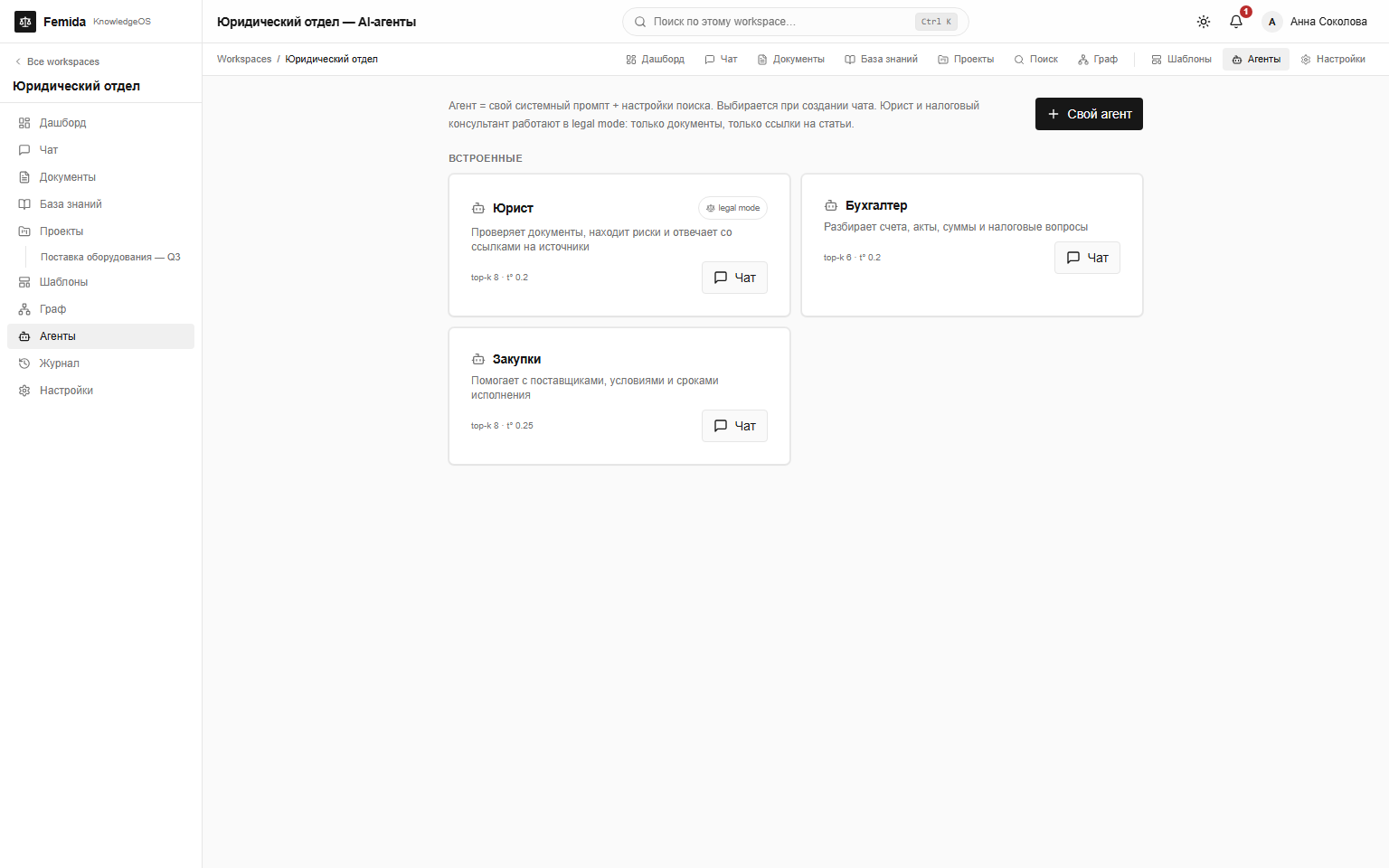
Agent settings

Instructions, retrieval depth, temperature and legal mode

08 / Security

Trust in AI begins with control over sources and access

Security is layered: access JWTs expire after 15 minutes, and rotating refresh tokens last 30 days in an httpOnly cookie. Reuse of an old refresh token revokes the related token family. The backend verifies workspace roles, APIs use CSRF protection, rate limiting and security headers, and uploads are checked by actual MIME type and SHA-256. Auditing records document, template, agent and access operations.

15 minaccess JWT
30 daysrefresh token
SHA-256file control
4workspace roles

The current stage is a functional MVP with an architecture designed for production. Client deployment requires final CI/E2E checks, infrastructure configuration and acceptance testing. Demonstration data on the screens is not presented as real client documents.

09 / Control Framework

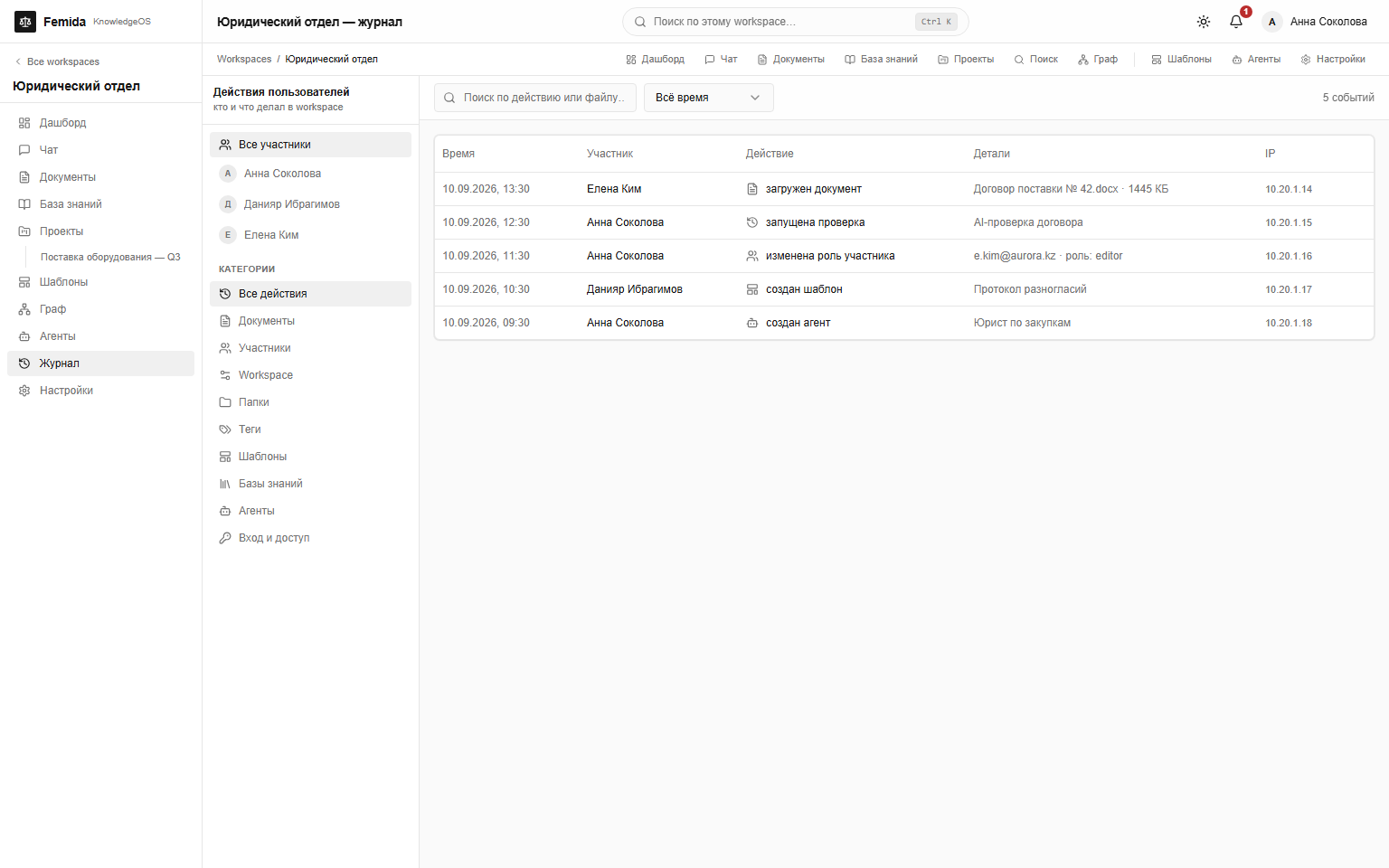
Administrators can review actions and permissions without exposing content to every employee

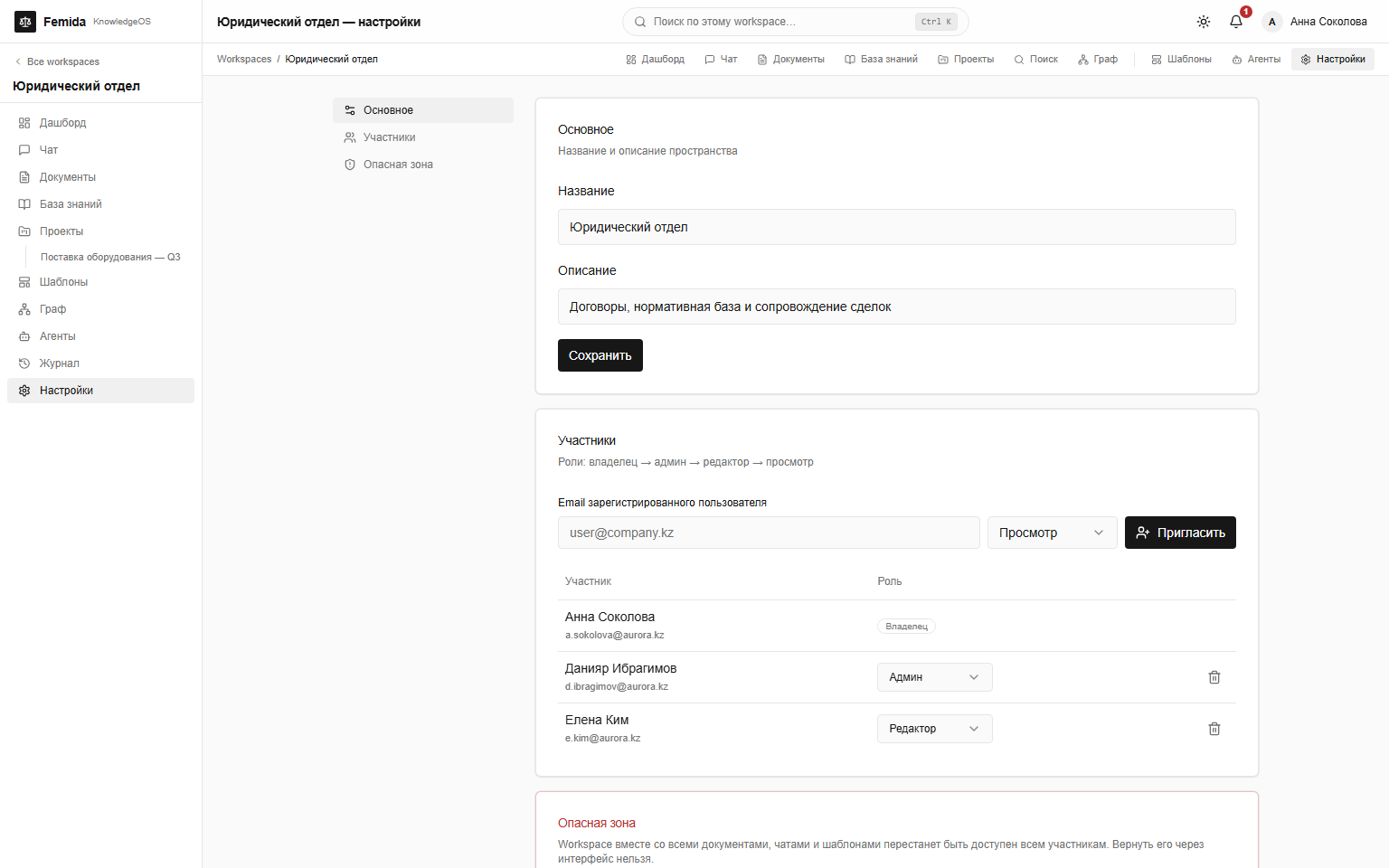
Global user/admin roles are combined with an owner → admin → editor → viewer hierarchy inside each workspace. Activity logs and dedicated workspace settings give managers a controlled collaboration model, while the backend remains the authoritative source for permission checks.

  • Document Isolation Between Workspaces
  • A separate Qdrant collection for each workspace
  • Revocable Sessions and Reuse Detection
  • Audit of Data and Access Operations
Workspace roles and settings — Femida KnowledgeOS
Workspace roles and settingsActual Access Management Interface
10 / Technical Review

The production environment covers everything from the reverse proxy to data recovery

01

Hybrid retrieval

Qdrant and PostgreSQL FTS are combined through Reciprocal Rank Fusion.

02

Local Index

FastEmbed computes embeddings on the CPU without sending files to an external service.

03

Background pipeline

Celery separates intensive OCR and parsing from the user request.

04

Observability

Structured logs, Prometheus, Sentry and health checks.

05

Quality

Alembic, pytest, Vitest, Playwright, Ruff and TypeScript typecheck.

06

Deployment

Docker Compose, Traefik 3.6, HTTPS/Let’s Encrypt and backup/restore scripts.

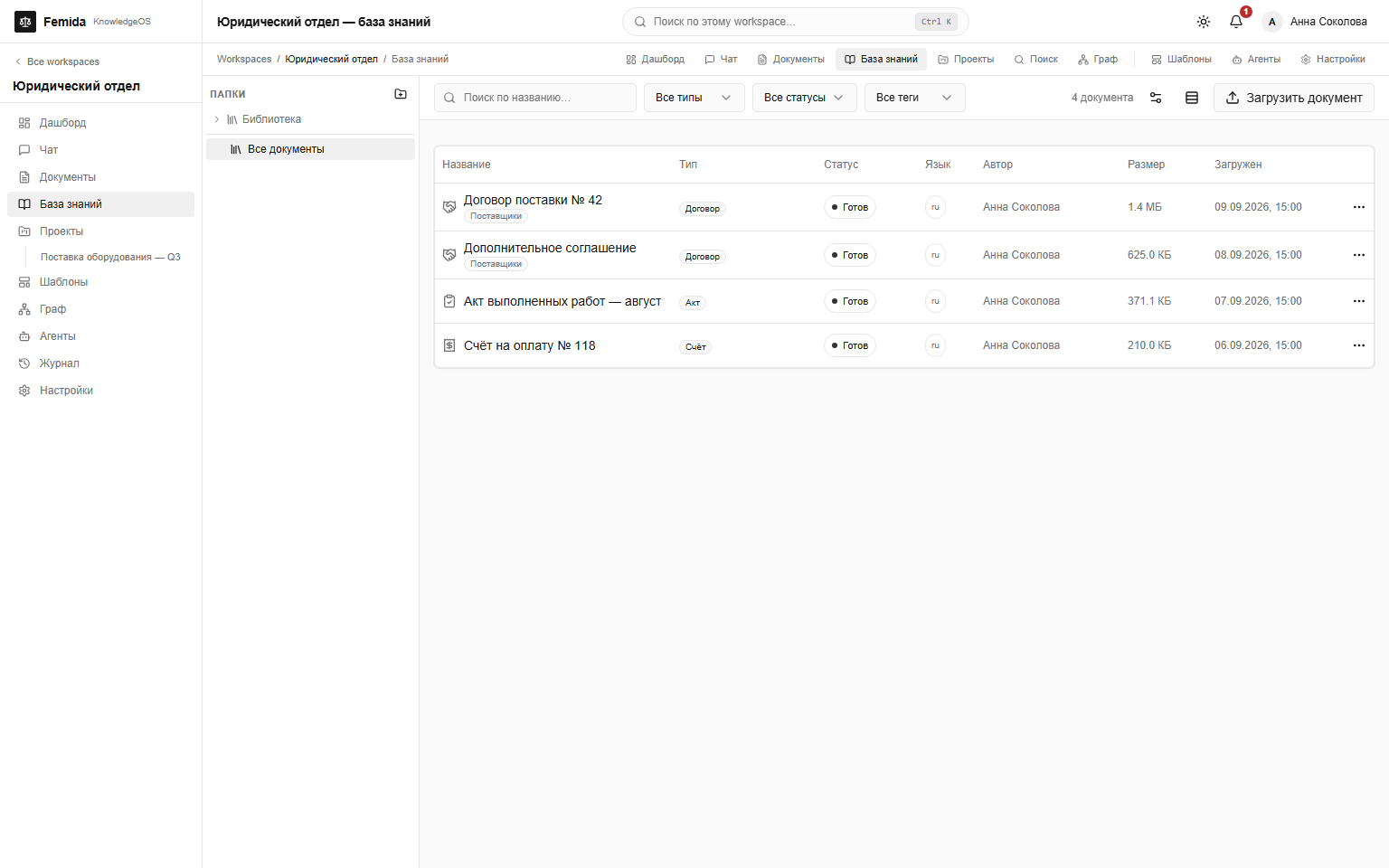
11 / Real Interfaces

Key journeys demonstrated through working product screens

12 / Result

Femida turns a document archive into an operational workspace: employees find verifiable answers faster, lawyers identify risks earlier, and managers oversee deal execution and activity history in one secure environment.

The platform sells a managed process—from file upload to decision, task and final document—not an “AI chat”.

Next.js 16FastAPIPostgreSQL 16Qdrant 1.12Celery + Redis
Next Project

Need a secure AI platform that answers questions using your documents and provides supporting evidence?

We will analyse the audiences, content, integrations and search demand, then design the structure and technical architecture before visual design begins.

Discuss the Project ↗Back to Case Studies