Product Range
Clearly separate dozens of materials, structures and applications.
The Wayne Industries corporate catalogue: office partitions, doors, glass structures, fire-resistant solutions, services and completed projects.
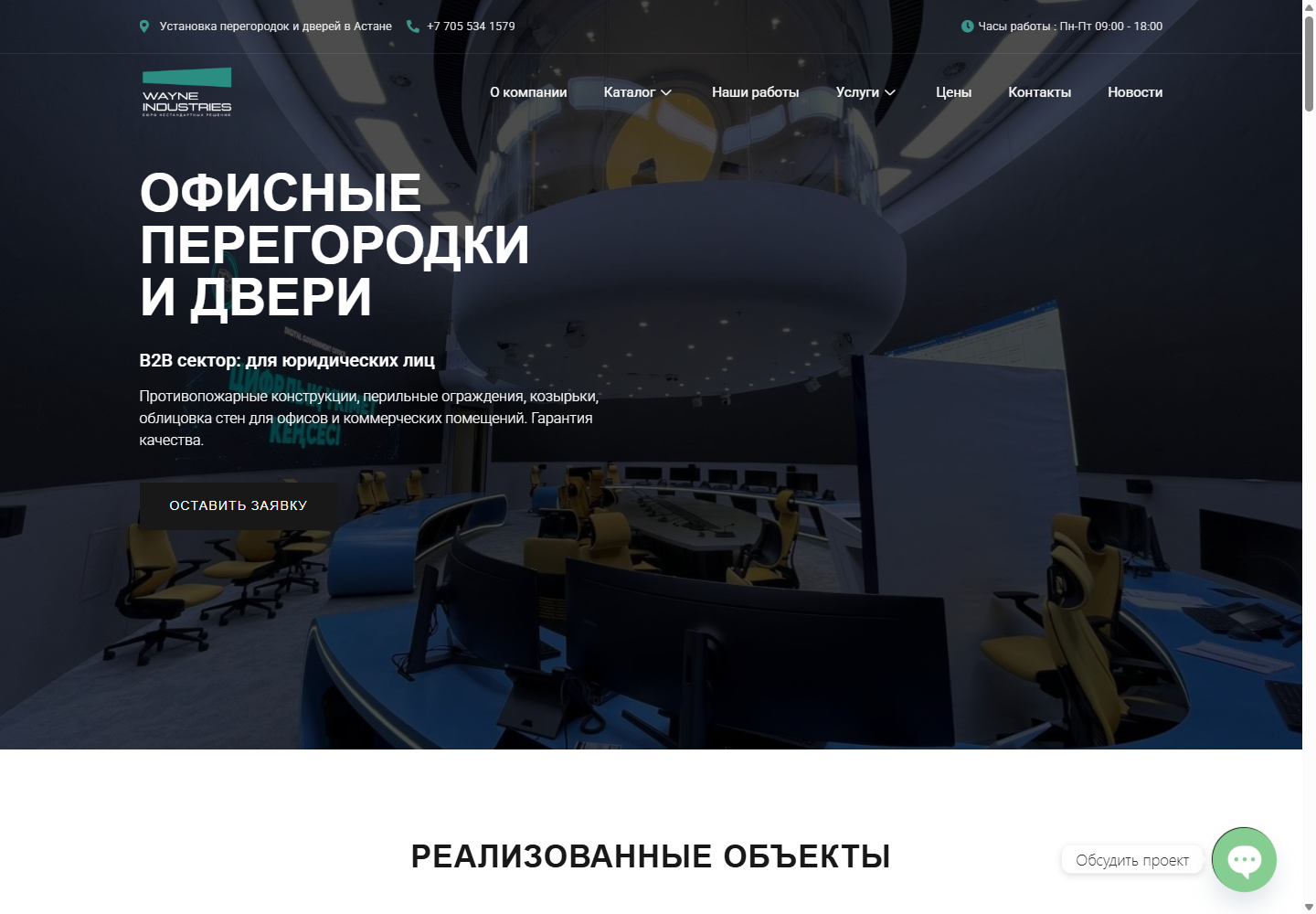
The catalog covers office, glass, framed, mobile, restroom and movable partitions, doors, canopies, barriers, fire-rated structures and installation services. Its structure needs to guide visitors from a solution type to a completed project and an inquiry.
Clearly separate dozens of materials, structures and applications.
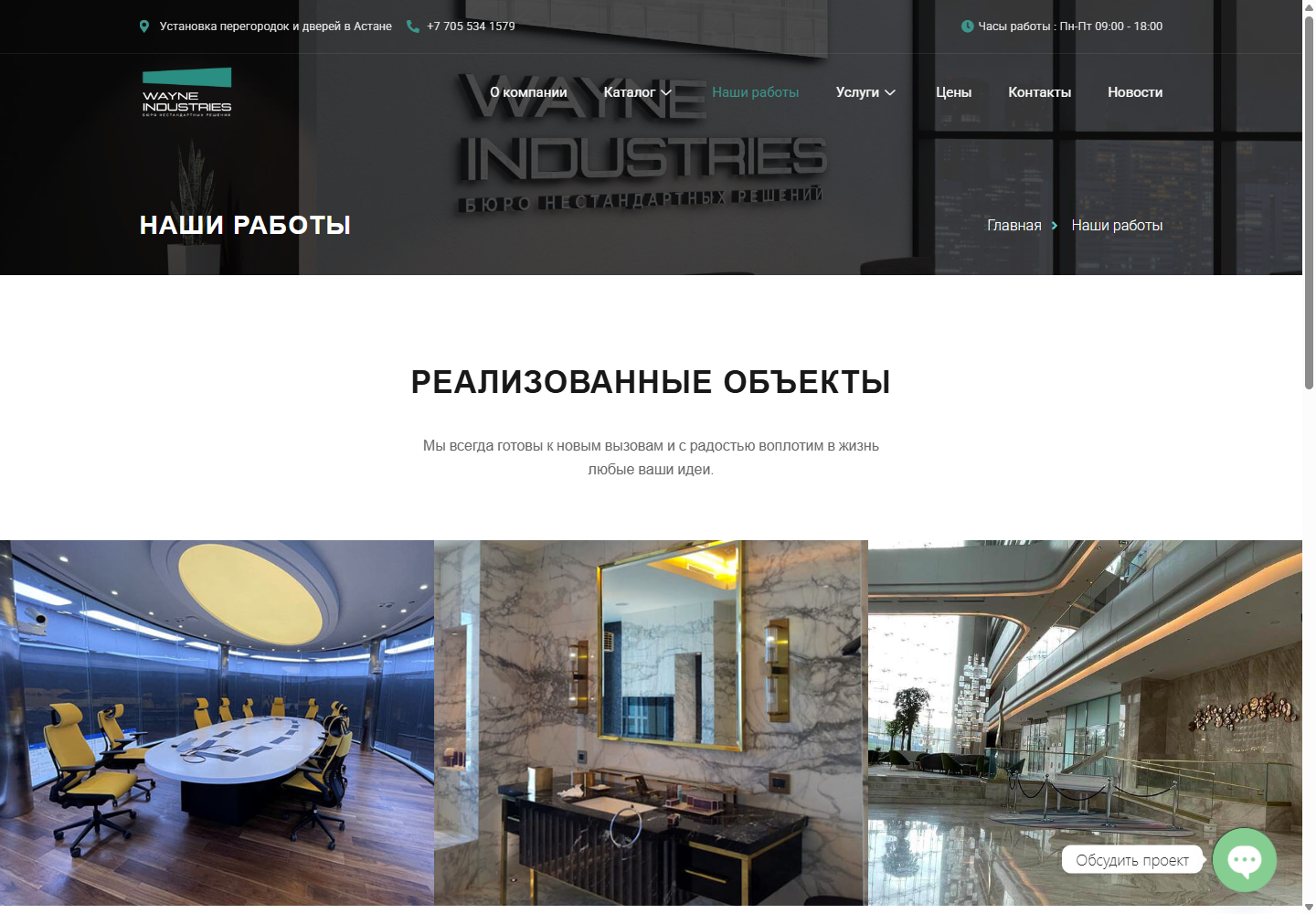
Support the promise with photographs of completed projects.
Create dedicated landing pages for specific product searches.
Provide a form, phone number and messenger at every decision stage.
The architecture was reconstructed from public navigation, internal links and accessible routes.
The opening screen establishes the company's specialization and B2B audience. A multilevel catalog presents solutions by structure and application, the portfolio demonstrates completed work, and forms and the contact widget let visitors request a quote without returning to the homepage.
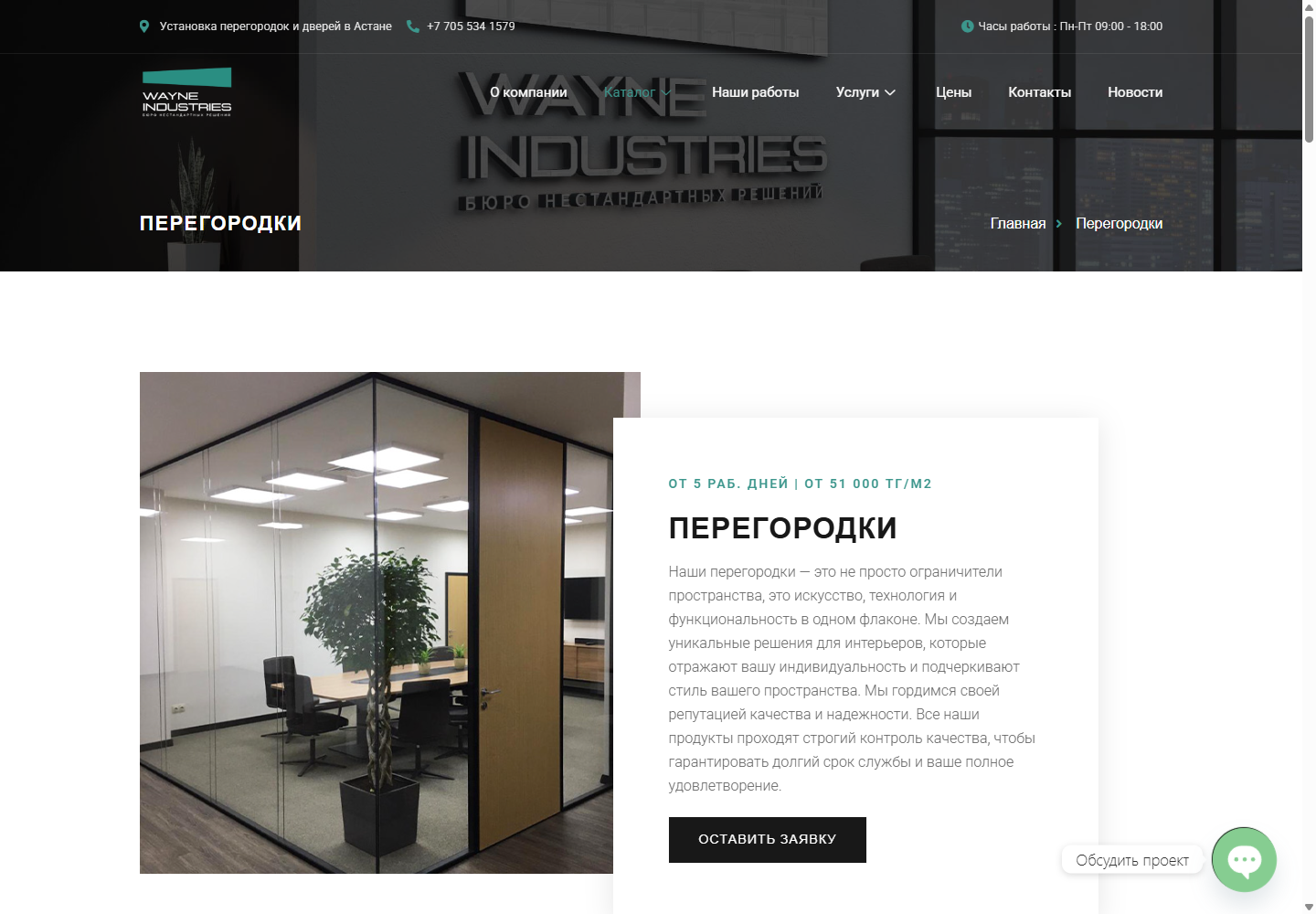
Dedicated URL for Each Structure Type
Partitions, doors, glass and fire-protection solutions
Photos and Use-Case Description
Standalone Service Pages
Contact Form 7 and Phone-Number Mask
Chaty and Floating Widget
Multi-Level Configuration Selection
Browse Completed Projects
Submit a Request Without Leaving the Page
Phone and Messaging Apps
The homepage has a description, canonical URL, Open Graph and JSON-LD. However, the standard wp-sitemap.xml serves an unrelated Japanese product page, and sitemap_index.xml contains 3,000 spam URLs under /products/ and /shopdetail/, dated 10.09.2026. This indicates a serious SEO/security incident requiring site isolation, file and database inspection, injection removal, sitemap restoration and recrawling after cleanup.
The SEO compromise was discovered when requesting public sitemaps on 10.09.2026 and is documented as an observed fact. It does not mean the visual website or inquiry forms are unavailable, but it requires urgent server-side investigation.
Navigation, headings, cards and calls to action are reorganised into a single vertical flow. The mobile screen below is an authentic capture of the original interface at a width of 390 px.
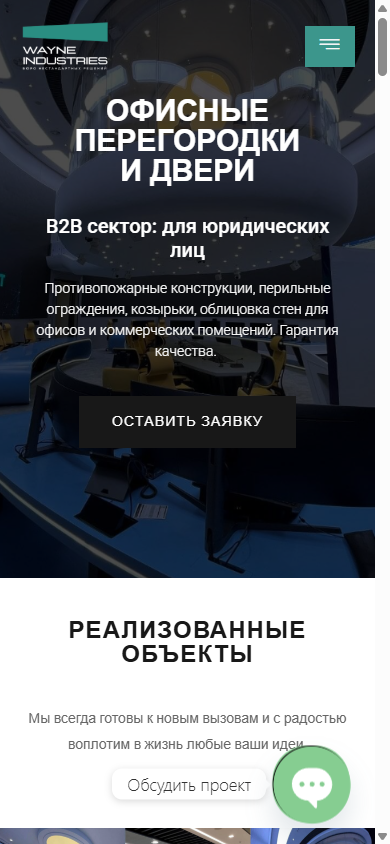
The home page and key internal pages, response statuses and redirects were verified.
Title, H1, description, canonical, Open Graph and JSON-LD were captured.
The technologies were verified through the names of public scripts, styles and API endpoints.
Homepage reviewed at 1440 × 1000 and 390 × 844.
The information model was validated against navigation, archives and the sitemap.
Every interface in this case study is an authentic project screenshot with no generated UI.
52 internal routes and dozens of product landing pages. The solution can evolve as the content and new user journeys grow.
View Project ↗We will analyse the audiences, content, integrations and search demand, then design the structure and technical architecture before visual design begins.
Discuss the Project ↗Back to Case Studies