Company
Positioning, principles, values, success factors and team.
A trilingual corporate platform for an investment group: strategy, asset portfolio, ESG, research and a unified media centre.
The investment group's corporate platform serves several purposes at once: it explains the direct investment approach, presents the portfolio and management team, publishes news and research, documents social impact and receives inquiries.
The interface builds trust through restrained typography, documentary project photography, a signature gold accent and predictable navigation. Each substantial section has its own URL and links to its corresponding Kazakh and English versions.
Positioning, principles, values, success factors and team.
Public founder profile and social initiatives.
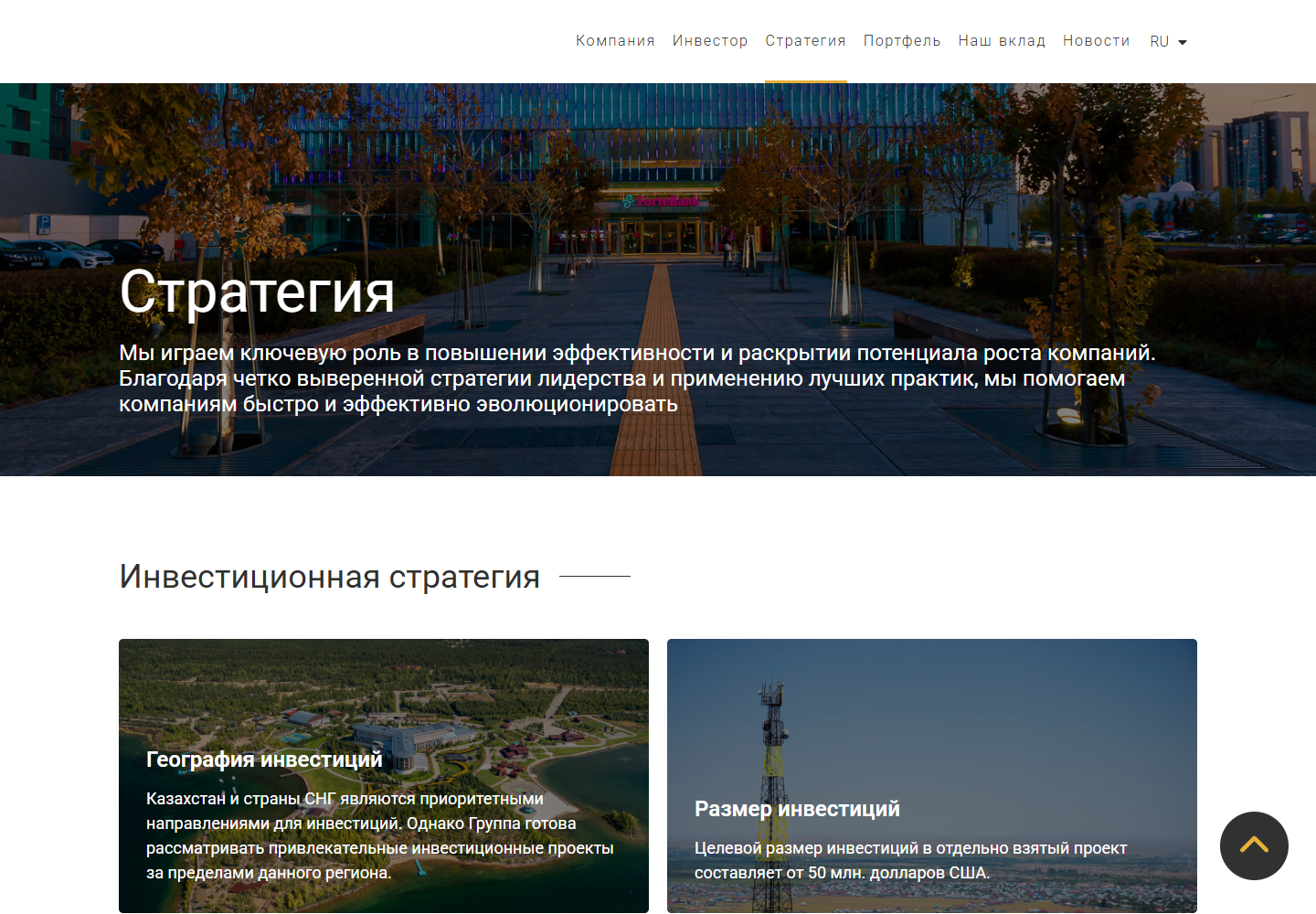
Geography, investment size, sectors, potential and criteria.
Industry groups and dedicated investment asset pages.
Environmental, social and governance areas.
Multilingual editorial feed with search and filters.
Market reviews, summary cards and downloadable documents.
Address, map, phone numbers, email and careers channel.
Sitemap at the audit date: 24 Russian, 21 English and 20 Kazakh page URLs. A separate sitemap contains 703 publication URLs across the three languages.
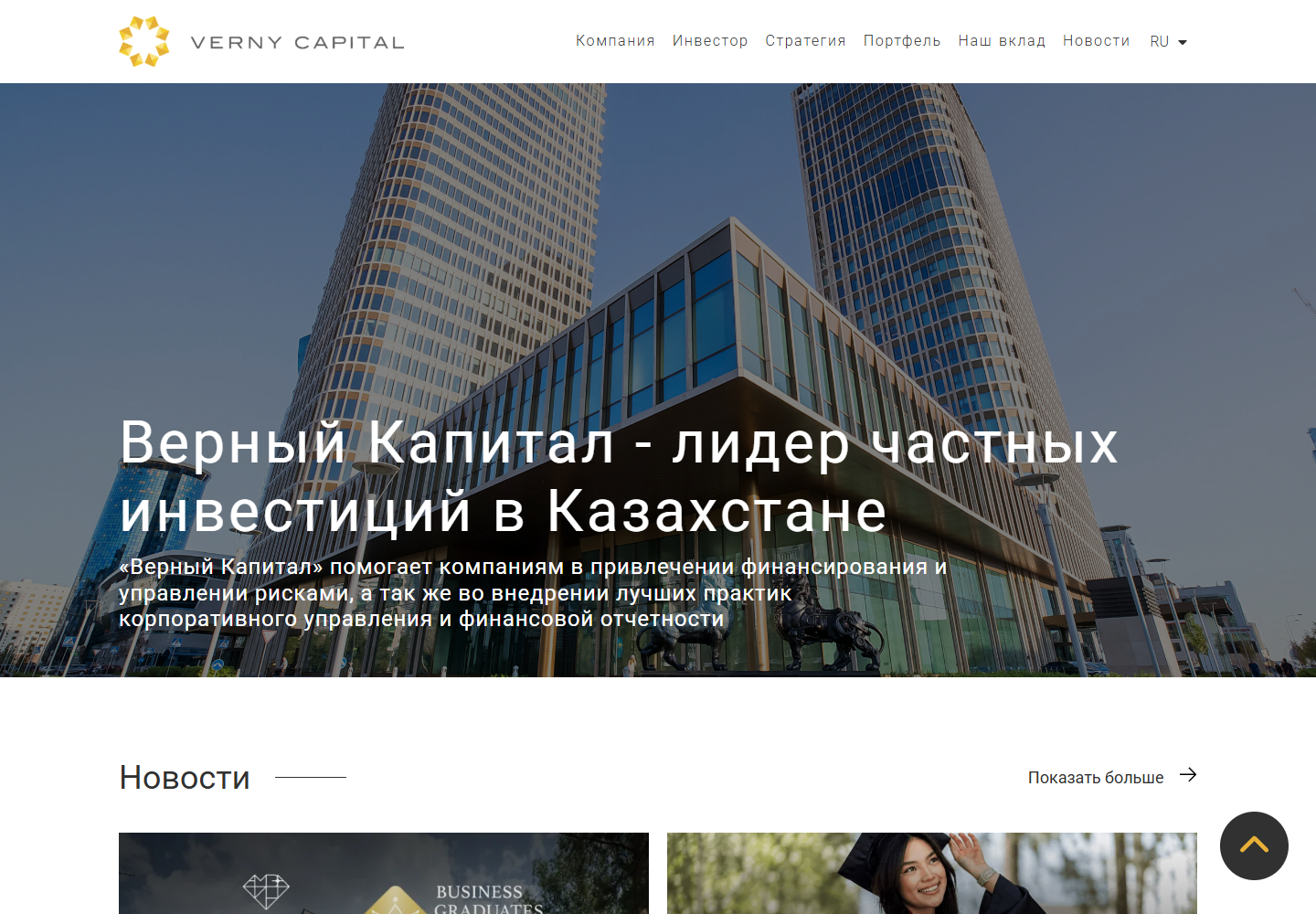
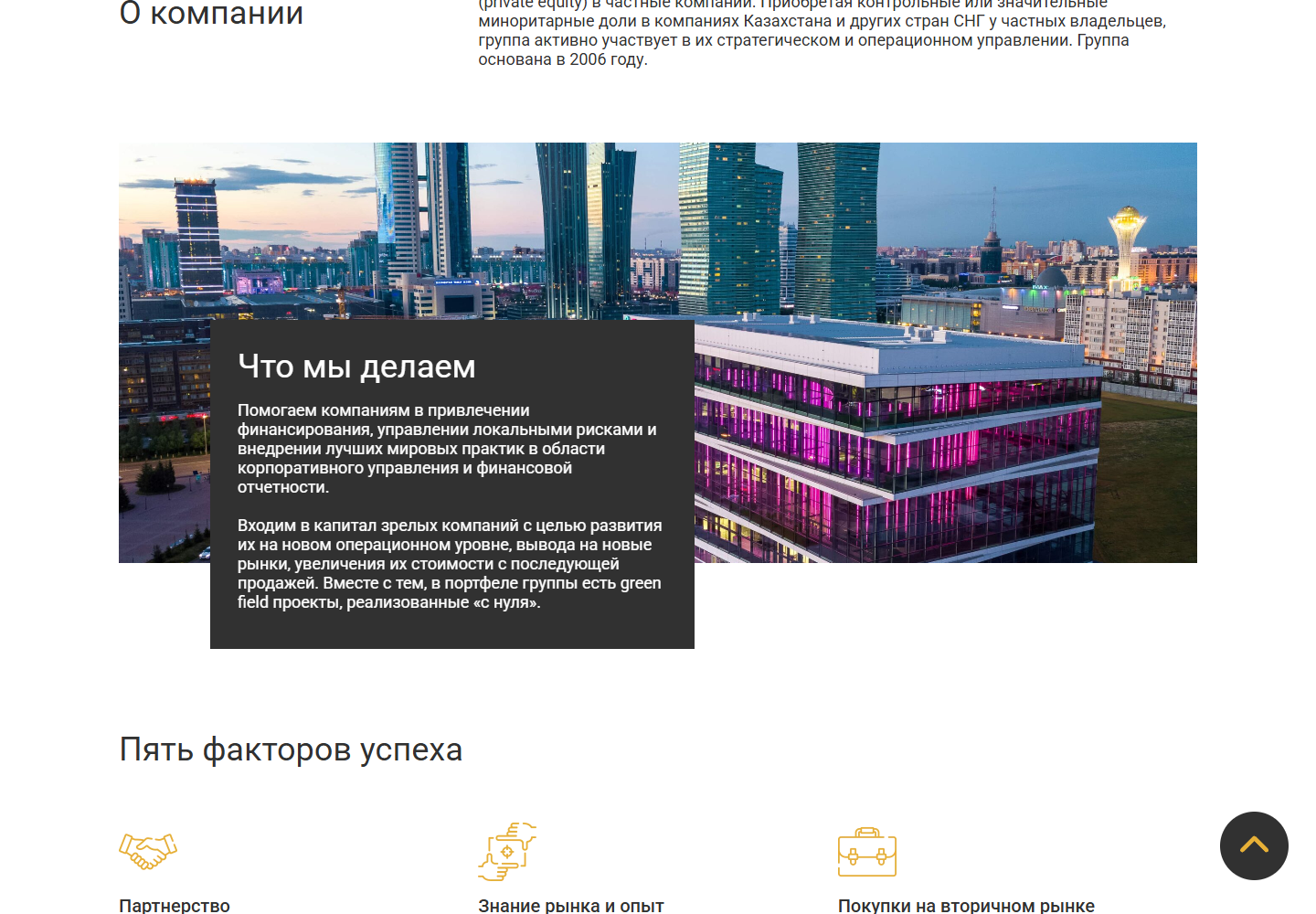
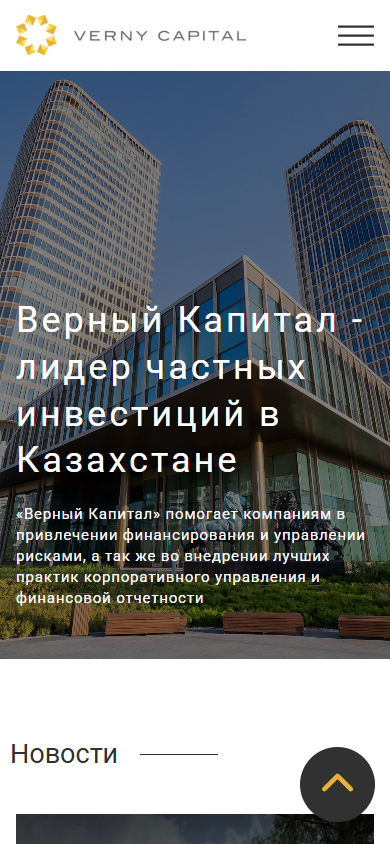
The opening screen explains the group's role and establishes context through Astana's architecture. Visitors then discover news, international partners and the projects the group invests in.
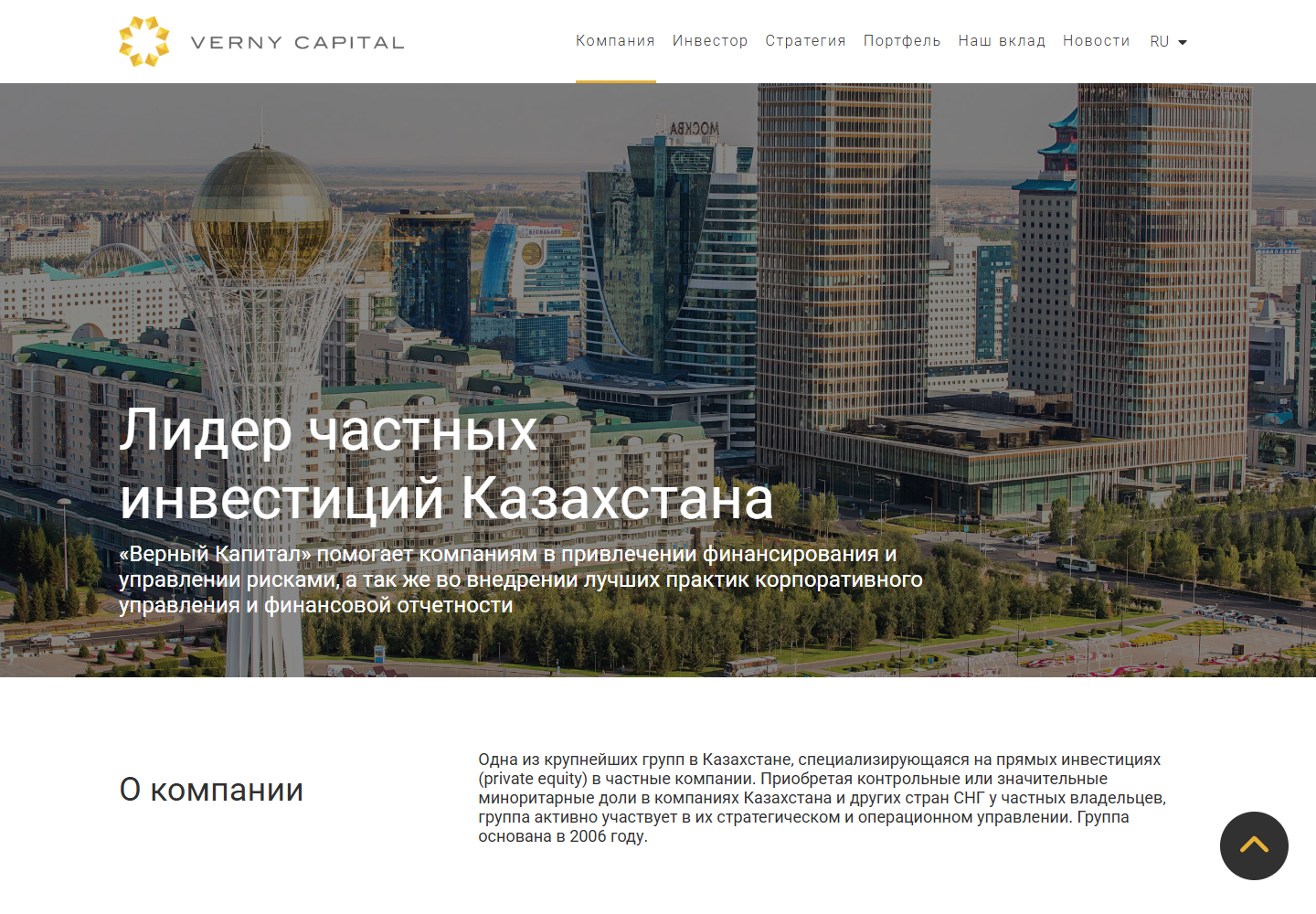
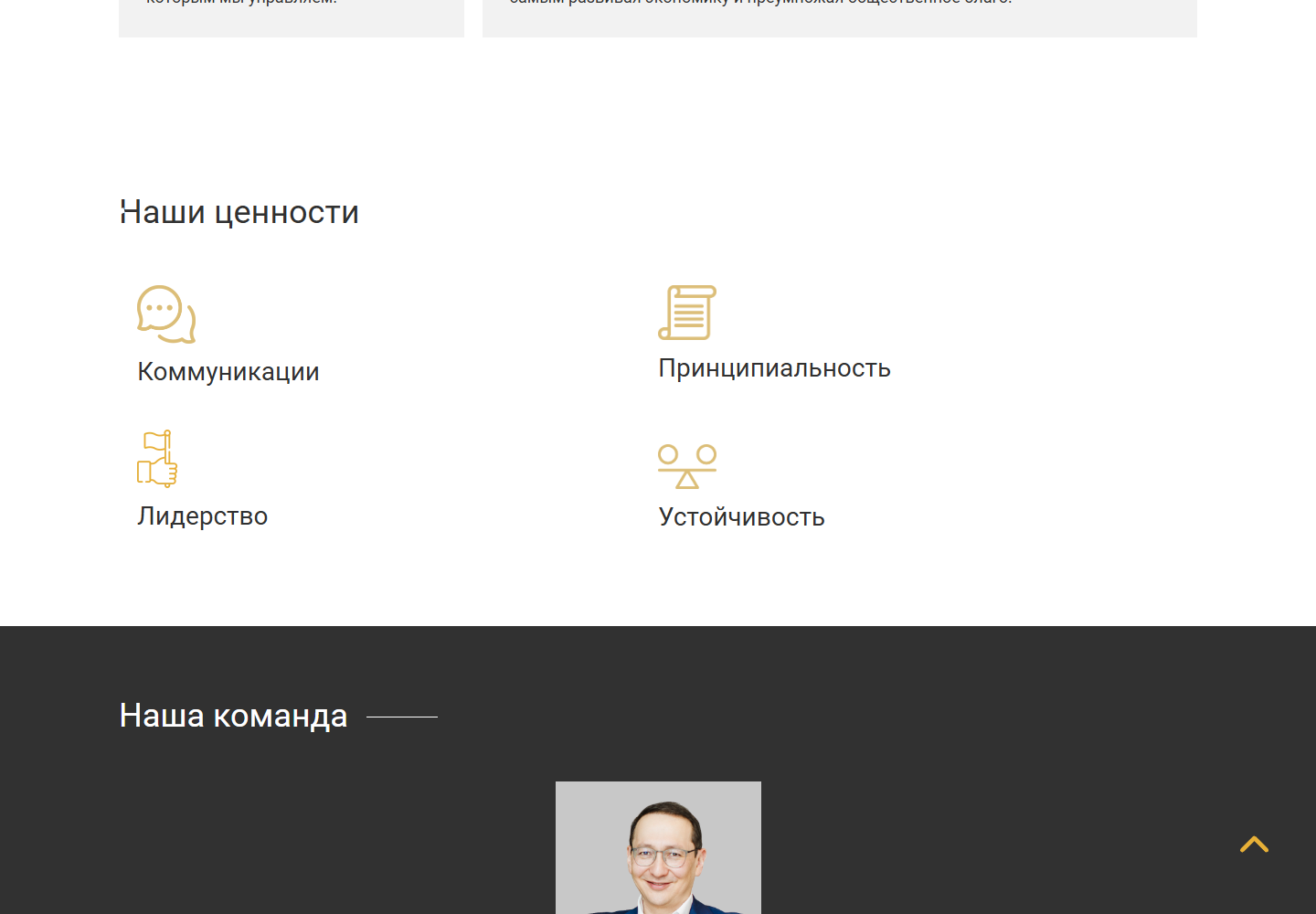
The company page brings together the investment model, five success factors, mission, vision, values and team. Executive profiles open as detailed individual cards with biographies and areas of responsibility.
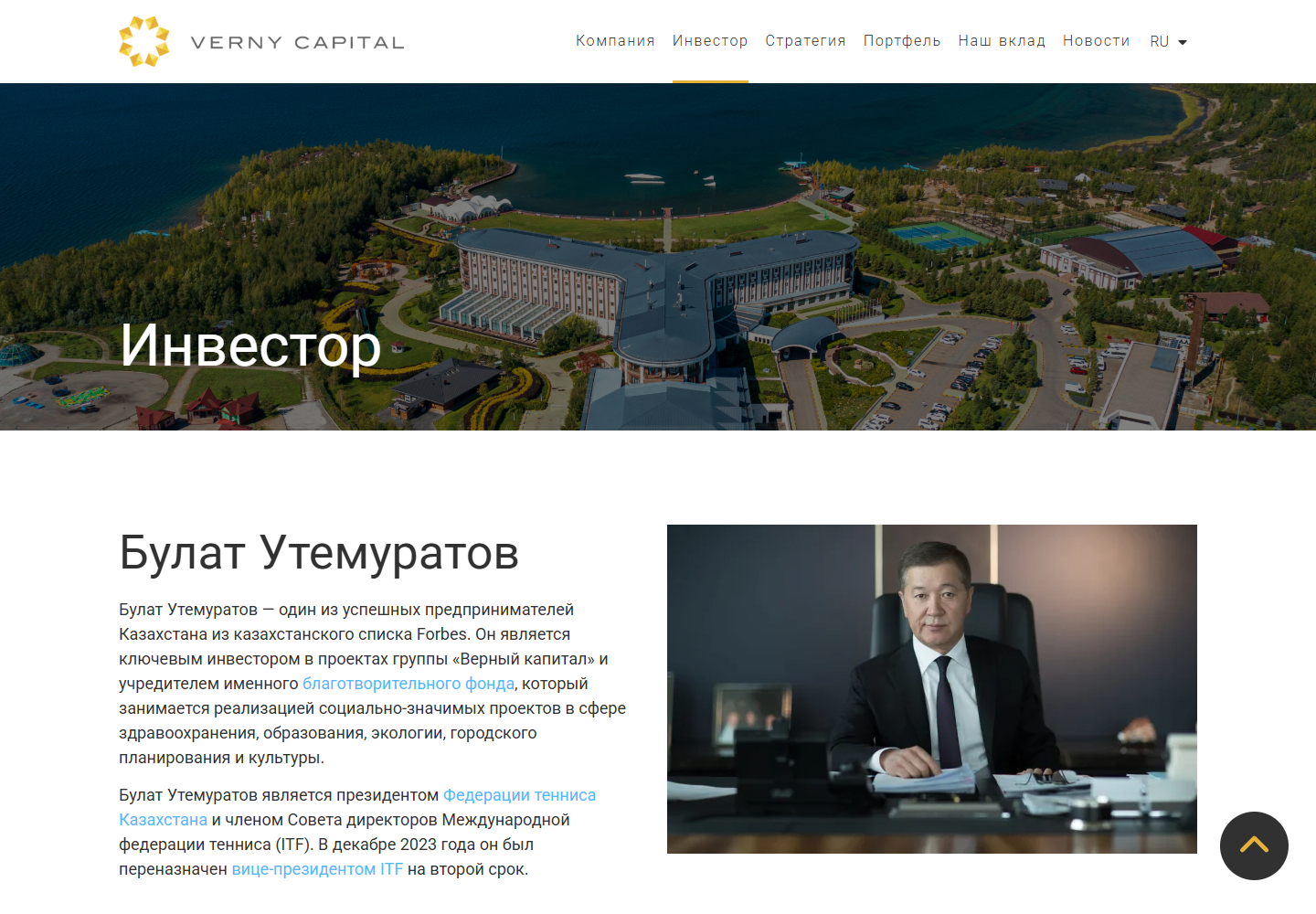
A dedicated page connects the investor's professional profile with charitable, educational, environmental and cultural initiatives. The long-form content is divided into meaningful sections and supported by documentary photography.
standalone content
branch within the website
The portfolio is divided into real estate, finance, telecommunications and media. Accordions shorten the initial view and reveal project descriptions and photographs when expanded. Each asset has its own page.
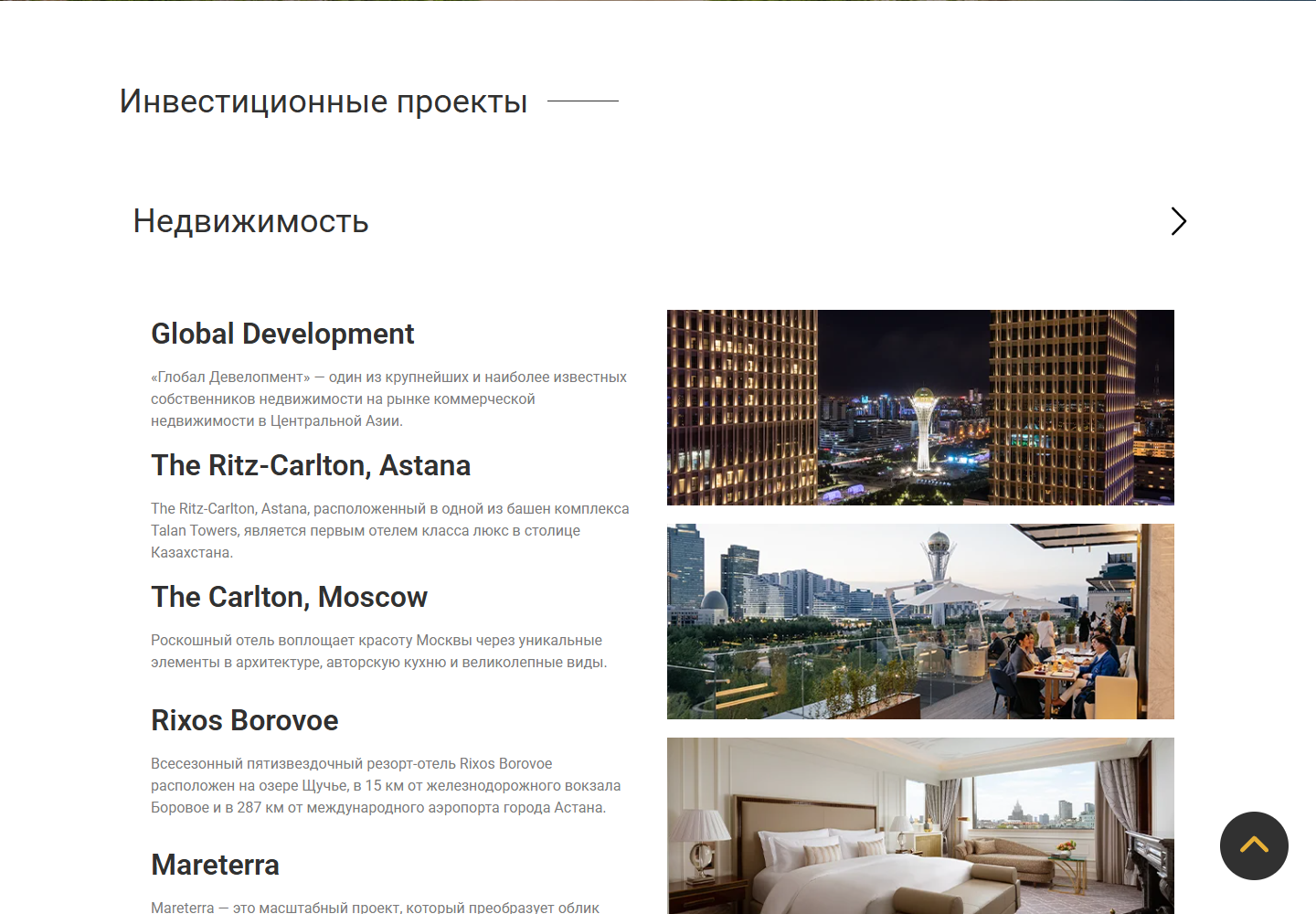
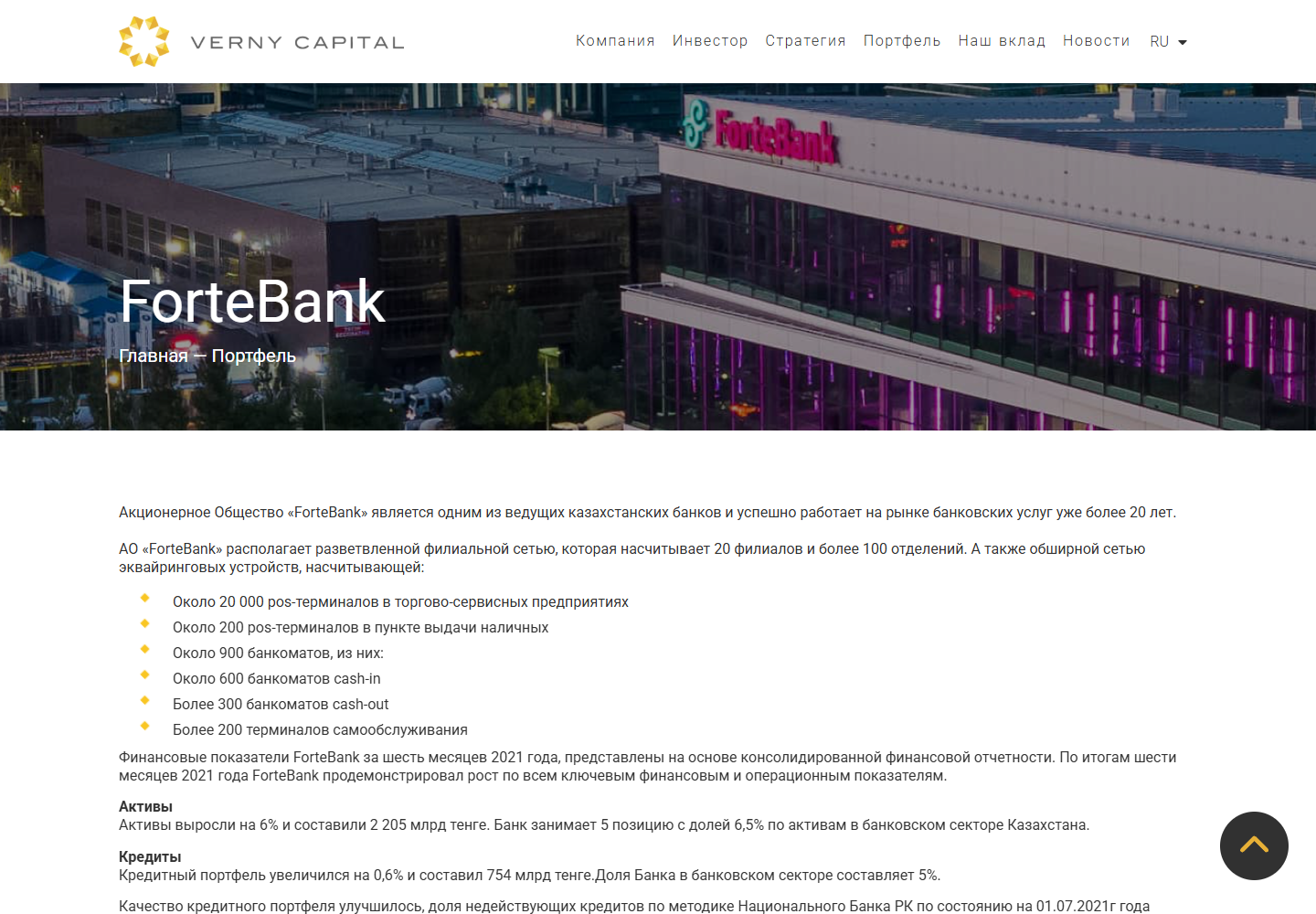
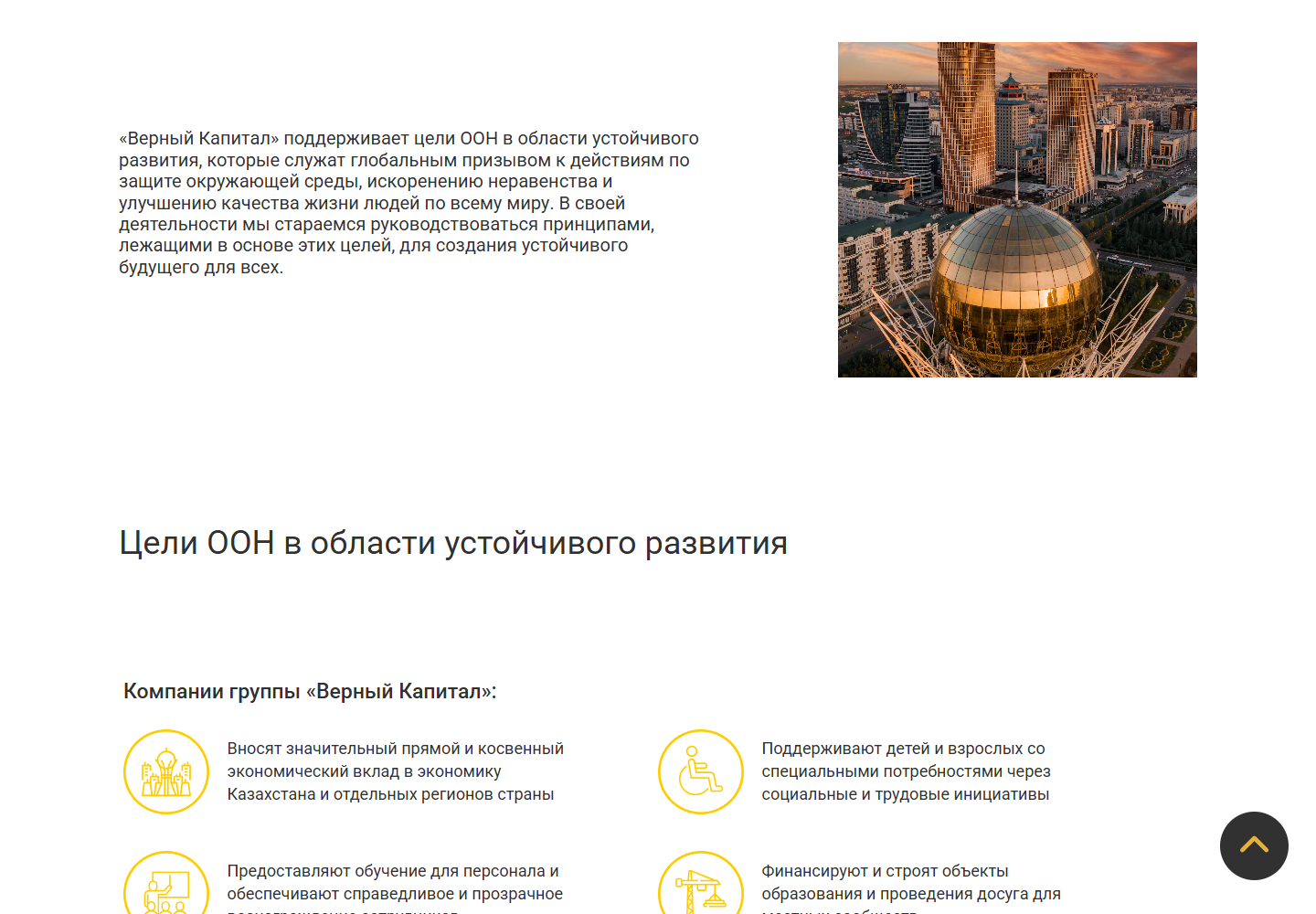
The section covers environmental, social and corporate governance, community support, education, healthcare and quality of life. Content is linked to the UN Sustainable Development Goals.
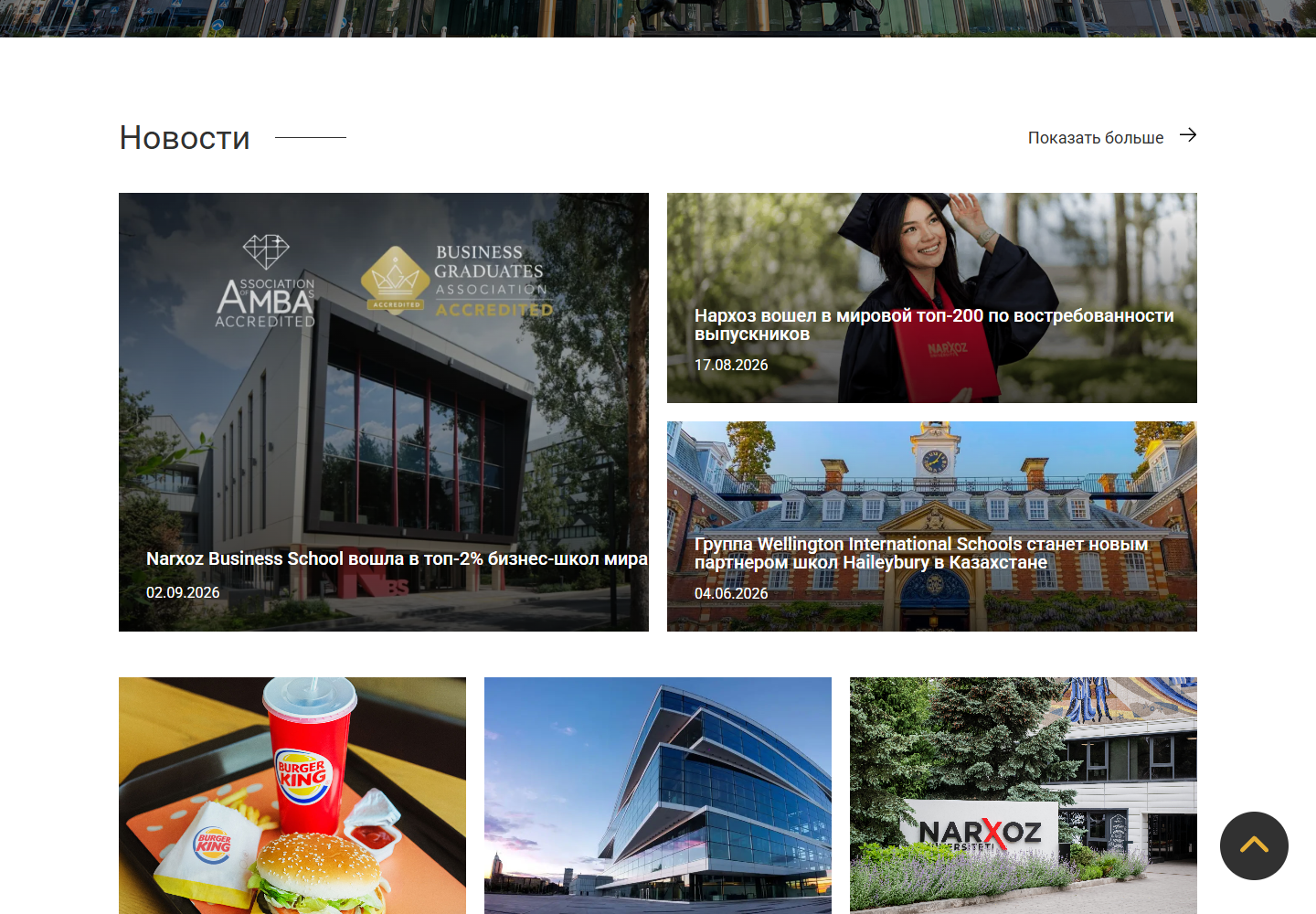
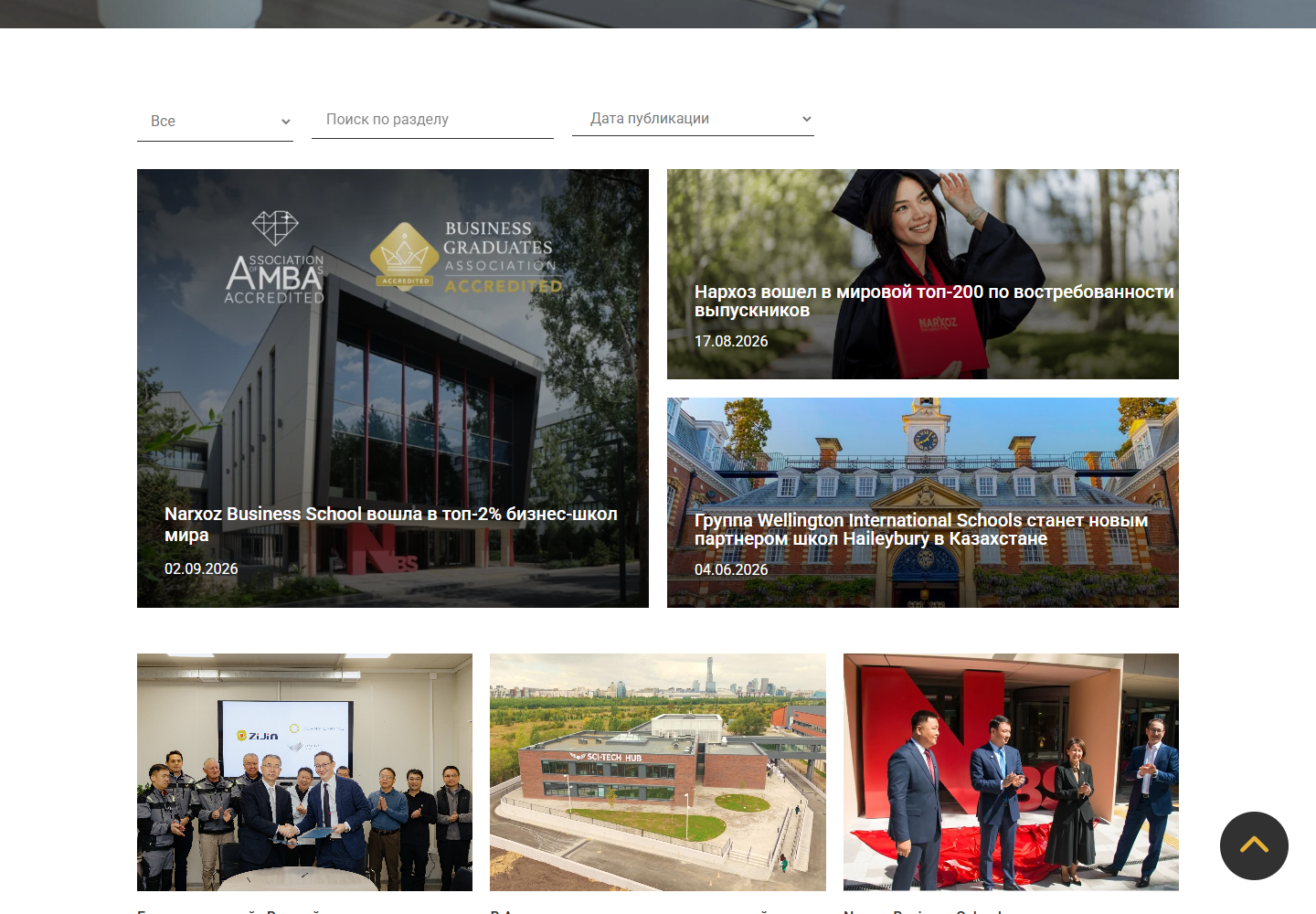
The news section supports search, filters, dates, cards and individual articles. AJAX pagination loads additional content without a full page refresh.
Research has its own archive with a cover, date, summary, content link and related PDF documents.
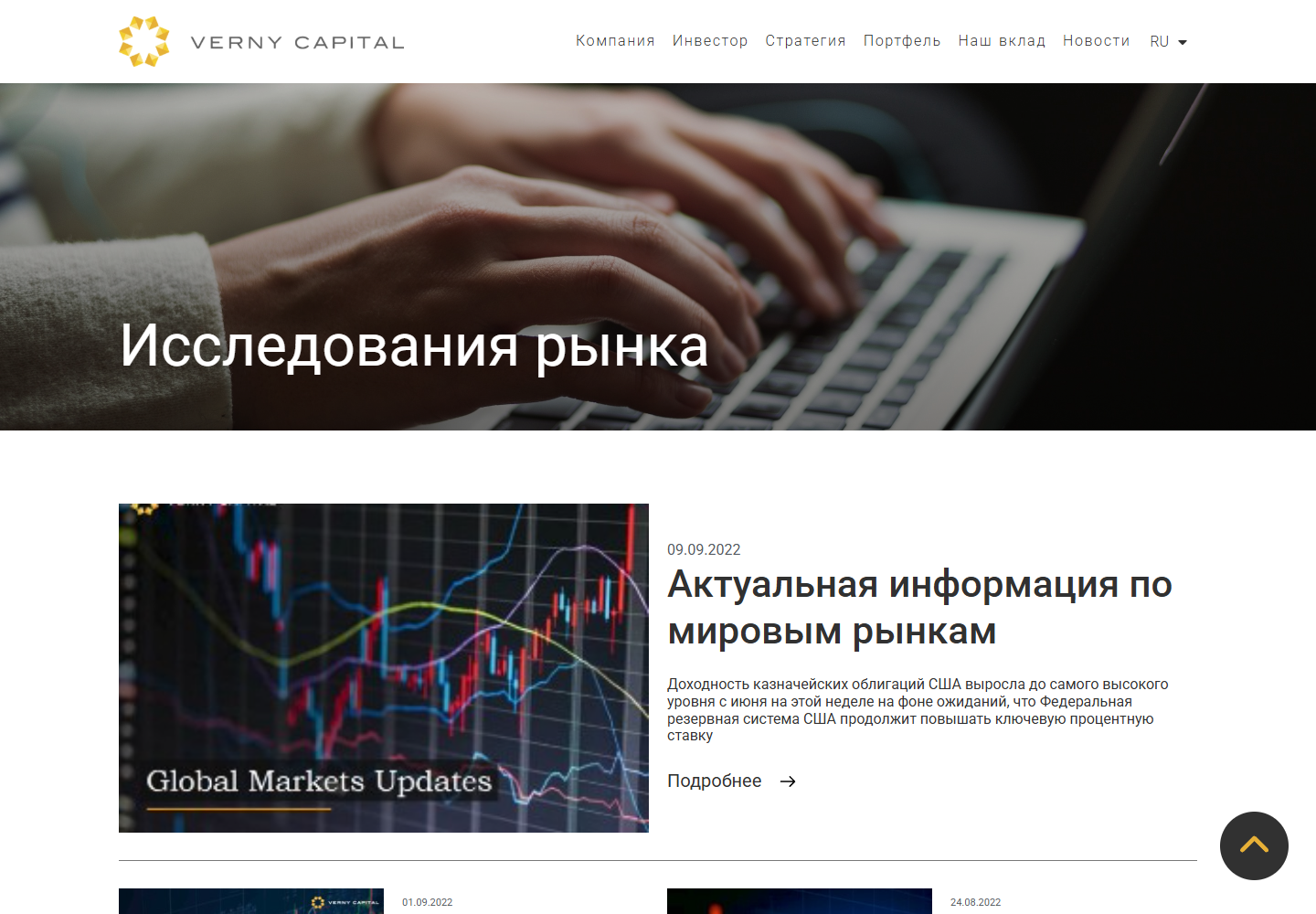
Polylang stores language relationships, while the switcher leads to the corresponding translation of the current content rather than a generic home page.
59 of 65 pages publish three alternate links for search engines.
News and AJAX requests are filtered by the current language.
Menus, labels, forms and system elements change with the language.
Each localisation has an indexable URL and its own canonical.
Company, investor, strategy, portfolio, impact and contacts.
Dates, language categories, images and dedicated publication URLs.
Industry, description, gallery, facts and related page.
Review card, date, summary and downloadable document.
Position, portrait, biography and modal presentation.
RU, KK and EN content linked through Polylang.
Managed data for reusable blocks and cards.
Shared header/footer and visual templates for content pages.
AIOSEO generates canonical URLs, Open Graph, Twitter Cards and BreadcrumbList, Organization and WebSite JSON-LD. The sitemap separates pages from posts, while language alternate links help search engines match translations.
Six utility or historical URLs do not publish a complete set of hreflang links. The sitemap also includes test pages and pages with technical names, which should be reviewed during subsequent index cleanup.
Images load as they approach the viewport.
WP Rocket defers non-essential scripts until the user interacts with the page.
Browsers receive modern image formats from WebP Express.
Some CSS and JS are served from a consolidated cache directory.
The public-facing environment runs behind nginx and is managed through Plesk.
Responses include X-Content-Type-Options: nosniff.
Measurements were taken in Chrome on 09.09.2026 during a cold load of the public website. They depend on the network, server cache state and page content. They represent a diagnostic snapshot, not a production SLA.
Unified navigation across corporate sections and languages.
Portfolio sectors expand without leaving the page.
News and publications are filtered by parameters and search query.
The next set of content appears without reloading the document.
The executive biography opens as an overlay on the team page.
Images and media support full-screen viewing.
The strategy journey concludes with an application for a potential investment project.
Research and impact reports are available as PDF files.
On smartphones, navigation collapses and the heading and supporting text reflow, while the visual hero remains the primary expression of the brand's positioning. Content cards and portfolio items form a vertical flow.
Home, company, investor, strategy, portfolio, ESG, news, research, contacts and assets.
Title, H1, canonical and hreflang extracted from every page URL.
CMS, plugins, analytics and optimization verified from the source HTML.
All case study images were captured directly from the live public interface.
Verny Capital combines investment positioning, project selection criteria, its portfolio, ESG and editorial content in one manageable system. WordPress gives the team a familiar publishing workflow, while templates maintain a consistent visual language across dozens of pages.
The architecture suits investment groups, funds, banks and holding companies that need to communicate strategy, update their portfolio regularly, operate a multilingual media center and publish documents.
View Verny Capital ↗We will analyse the audiences and processes, then design a multilingual structure, portfolio, media centre and user-friendly editorial system.
Discuss the Project ↗Back to Case Studies