
Scale
Organize dozens of subsections into robust multilevel navigation.
The Kazakhstan Football Federation digital platform: national teams, tournaments, news, documents, coach education and media content.
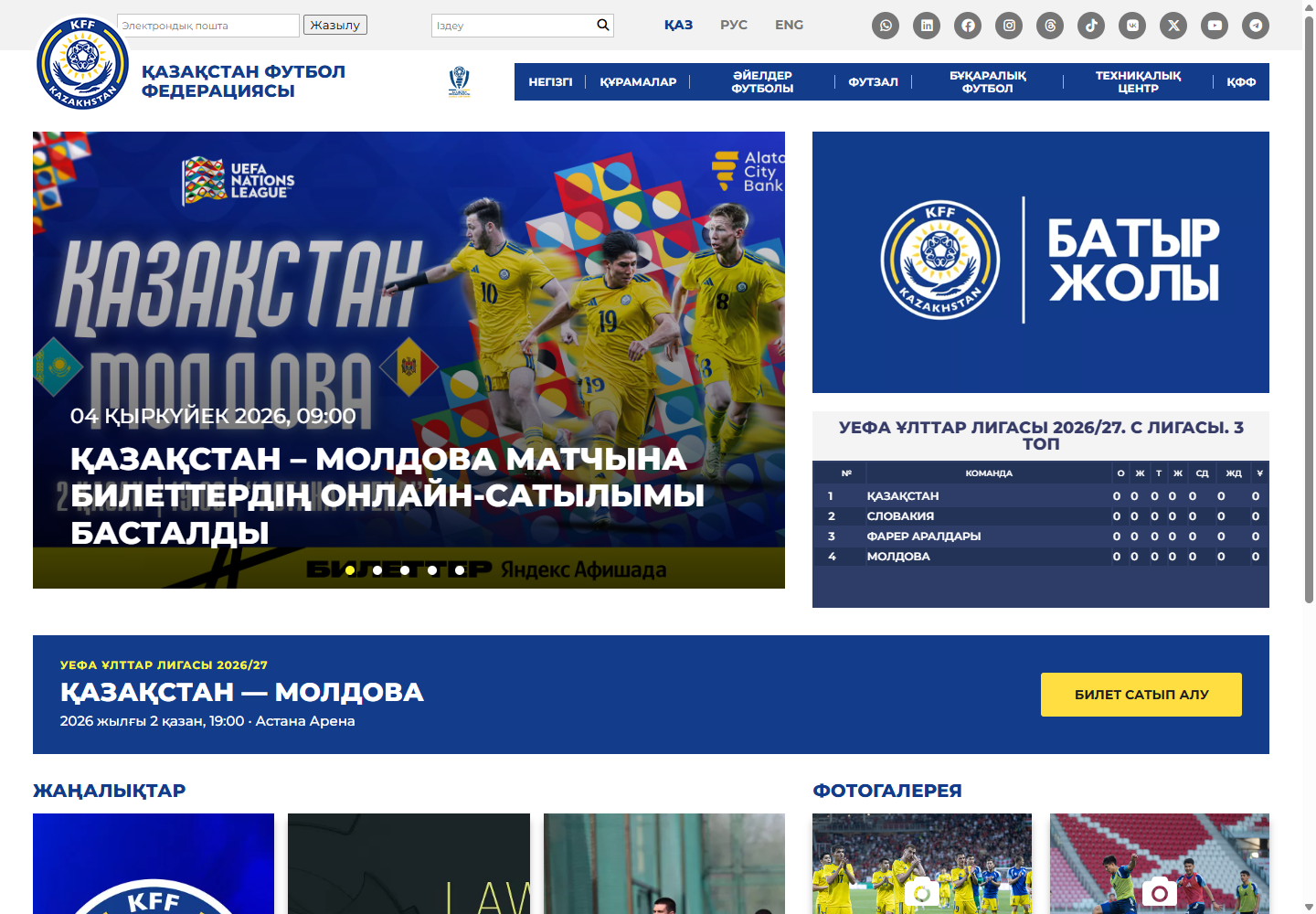
The official platform must deliver national team news quickly, show squads and standings, publish documents and support professional workflows. Dedicated branches cover women's football, futsal, grassroots and youth football, the technical center, licensing and coach education.
Organize dozens of subsections into robust multilevel navigation.
Publish news, appointments, results and media content at the pace of the season.
Present tables, squads and age-group teams within a unified model.
Provide access to licences, courses, documents, accreditation and procurement.
The architecture was reconstructed from public navigation, internal links and accessible routes.
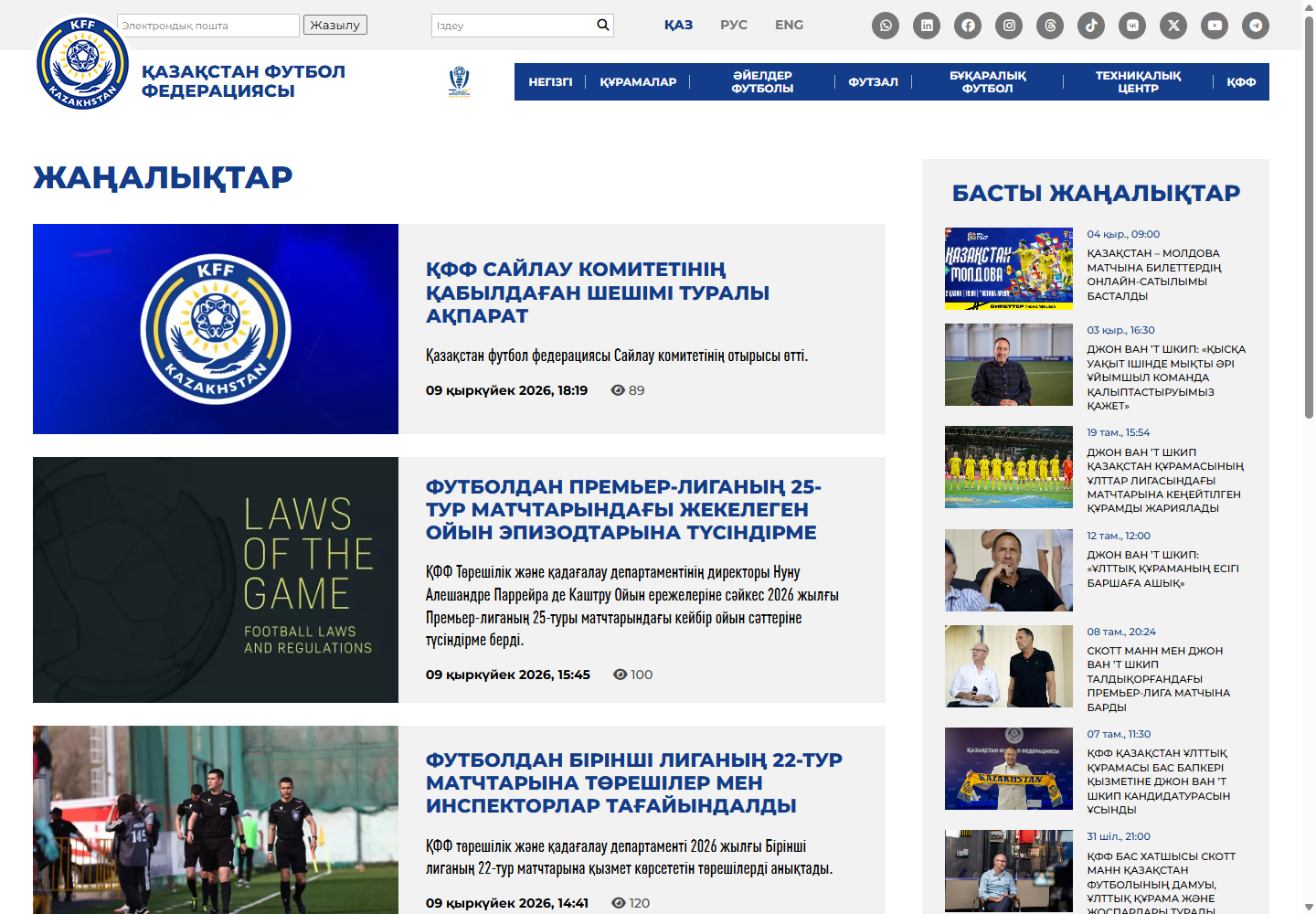
The opening screen functions as a match center, combining a lead story, standings and ticket access. National team pages show players and fixtures, and the news archive maintains a current feed. The top menu separates football areas by audience, while full-text search helps users navigate the deep structure.
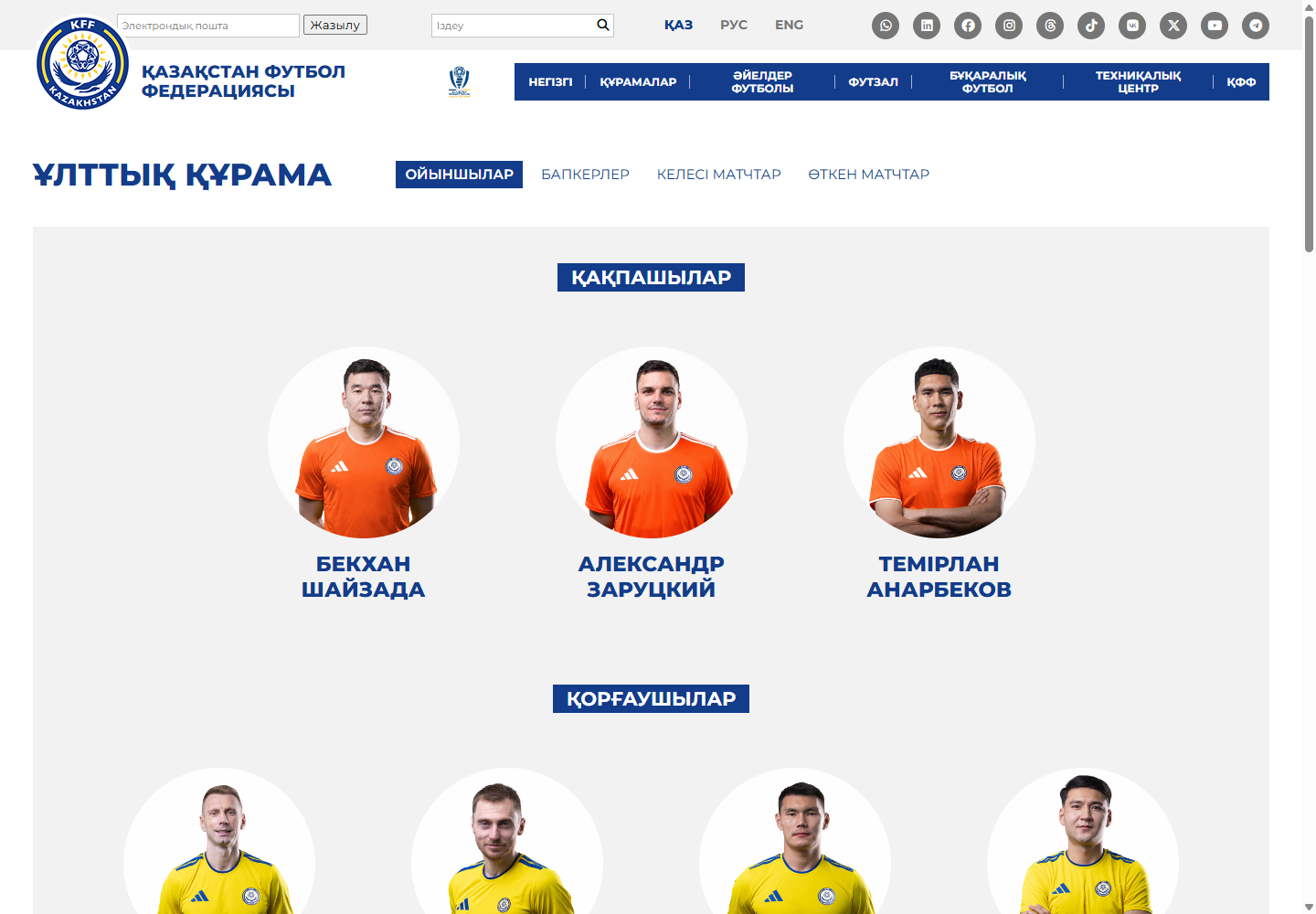
Senior national team, U-21, U-19, U-17, U-16 and U-15
Standings, Points, Goal Difference, and Schedule
News by Team and Area
Finance, licensing, anti-doping and procurement
License Categories and Application Submission
Galleries, Videos, and Social Channels
Match Announcement and Ticket Link
National Team Standings
Search Across a Large Content Database
Access to Dozens of Professional Sections
The homepage includes Open Graph but lacks a canonical URL, meta description, JSON-LD and hreflang. The sitemap endpoint returns 404, and robots.txt permits crawling without linking to a sitemap. At this scale, priorities include SportsOrganization, SportsTeam, NewsArticle, Event and BreadcrumbList schema, XML sitemaps by content type and trilingual alternate links.
The structure and technology stack were recorded on 10.09.2026 using public HTML, response headers and routes. Sports results change, so this case study treats them as a data type rather than fixed metrics.
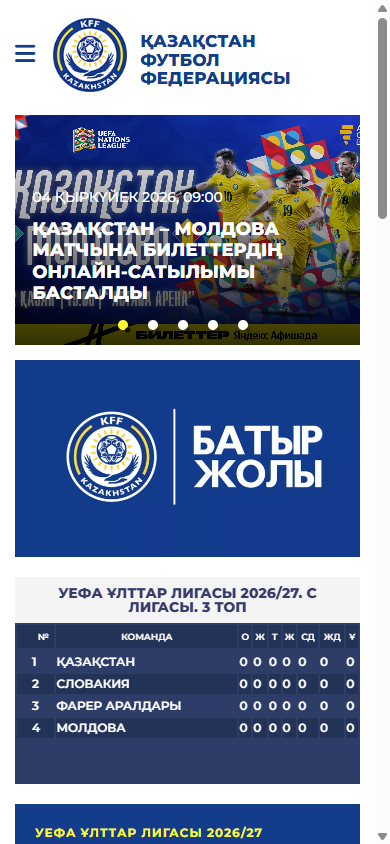
Navigation, headings, cards and calls to action are reorganised into a single vertical flow. The mobile screen below is an authentic capture of the original interface at a width of 390 px.
The home page and key internal pages, response statuses and redirects were verified.
Title, H1, description, canonical, Open Graph and JSON-LD were captured.
The technologies were verified through the names of public scripts, styles and API endpoints.
Homepage reviewed at 1440 × 1000 and 390 × 844.
The information model was validated against navigation, archives and the sitemap.
Every interface in this case study is an authentic project screenshot with no generated UI.
3 languages and more than 80 internal sections. The solution can evolve as the content and new user journeys grow.
View Project ↗We will analyse the audiences, content, integrations and search demand, then design the structure and technical architecture before visual design begins.
Discuss the Project ↗Back to Case Studies