Editorial Depth
Support long-form research content and categorization.
A history and ethnology journal reimagined as a digital publication: articles, podcasts, Chingizkhan FM, three languages, subscriptions and personal accounts.
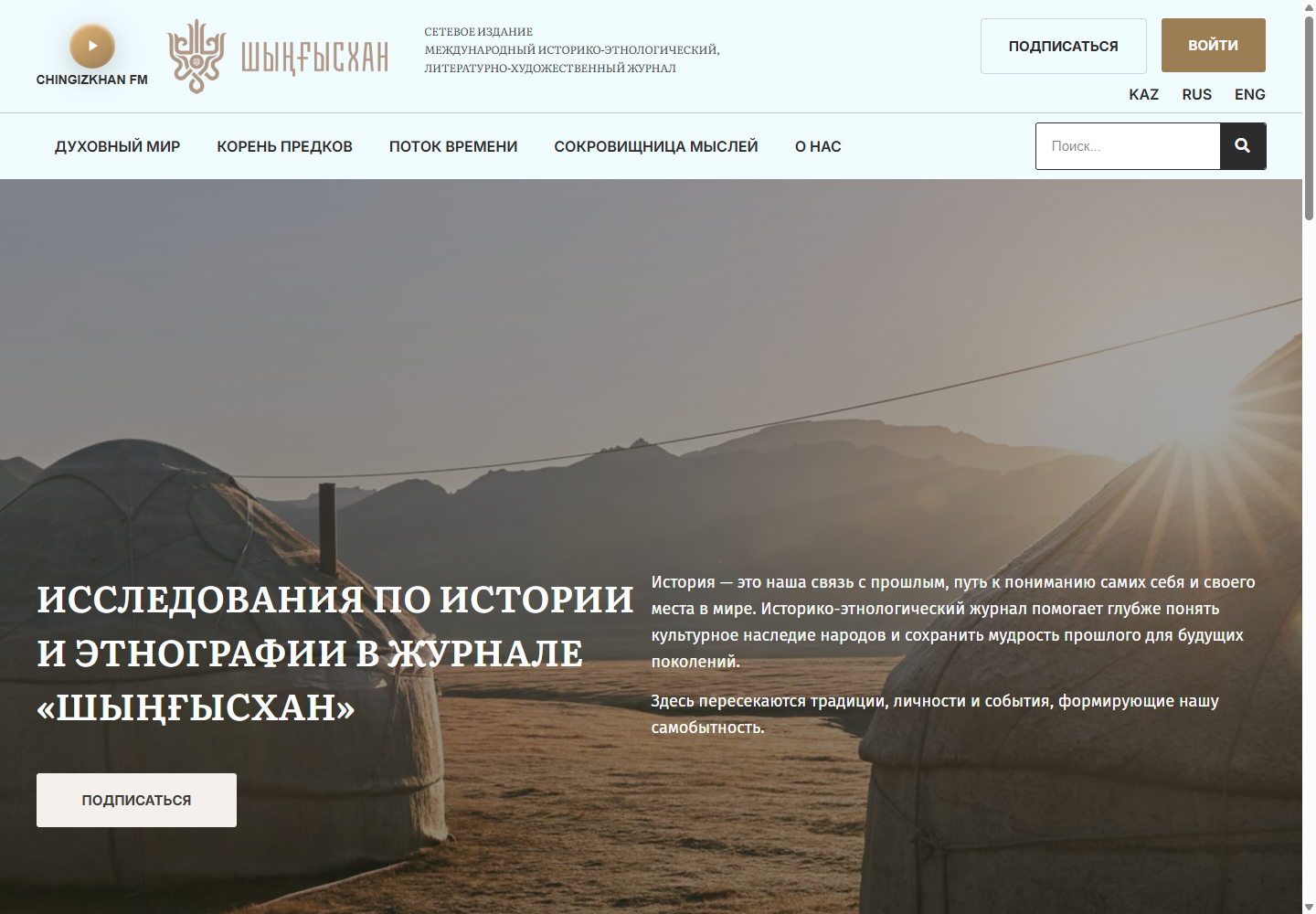
The publication offers historical and ethnological research, literary content and podcasts. Users can browse by topic, listen to Chingizkhan FM, subscribe and sign in. This requires editorial UX and commerce journeys to work within one system.
Support long-form research content and categorization.
Embed audio and podcasts without losing context.
Connect subscriptions, accounts and content access.
Manage the KAZ, RUS, and ENG Editions.
The architecture was reconstructed from public navigation, internal links and accessible routes.
The opening screen introduces the issue's theme and leads to a subscription. The sections ‘Spiritual World’, ‘Ancestral Roots’, ‘Flow of Time’ and ‘Treasury of Thoughts’ provide consistent navigation. Podcasts and FM add listening options, while the store and account complete the commercial journey.
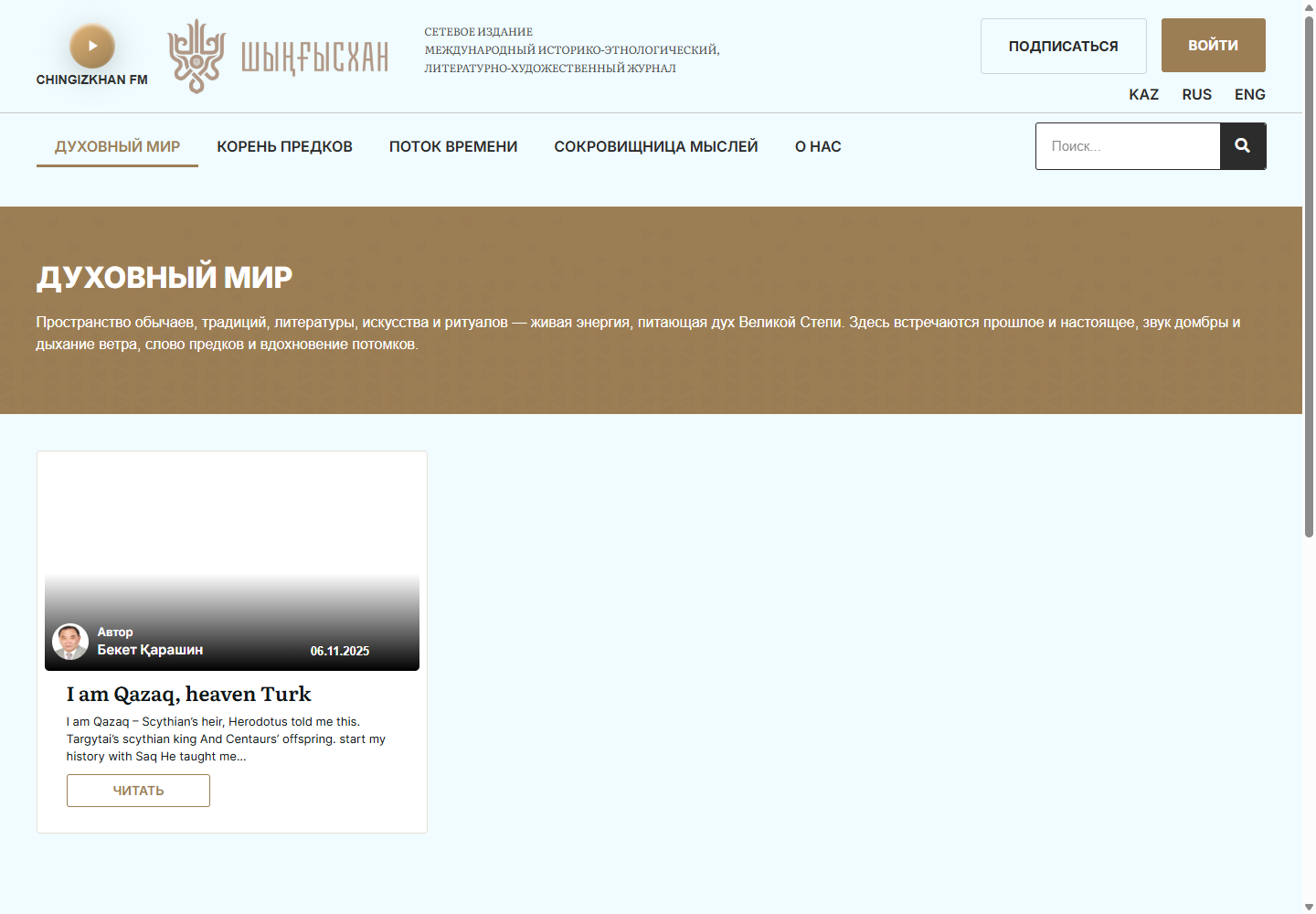
Text, Author, Date, Image, and Section
Four Thematic Archives
MP3 and MediaElement player
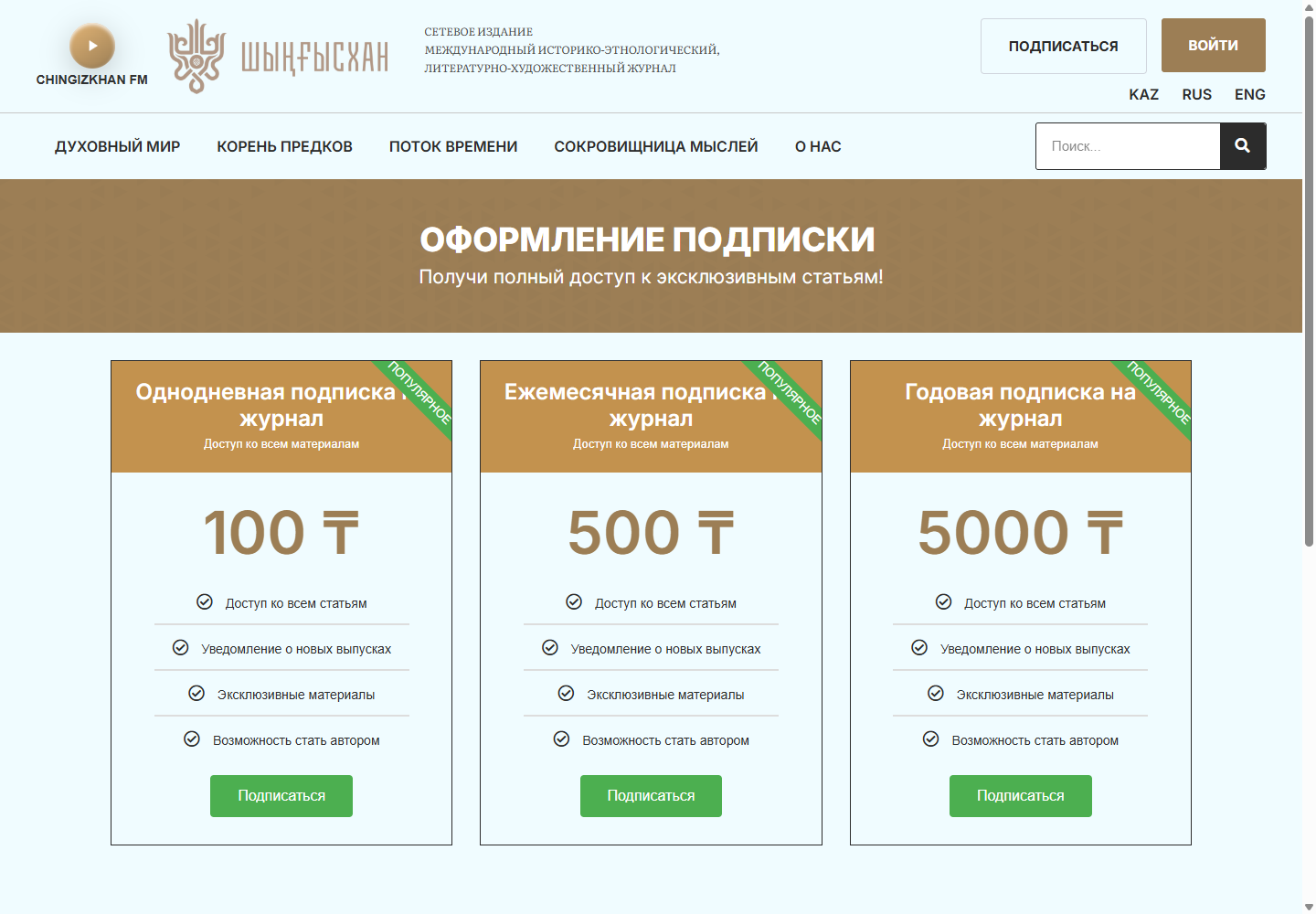
WooCommerce product and shop
Login and membership flow
Related Publications and Navigation
FM and MP3 Playback
Proceed to Store and Checkout
Login and User Area
Publication Archive Search
The homepage publishes a canonical URL but had no meta description, Open Graph or JSON-LD during the audit; standard sitemap endpoints returned 404. The magazine needs Article/NewsArticle, Person, PodcastEpisode, AudioObject, Product and BreadcrumbList markup, plus an article sitemap and language alternate links.
The WordPress, Elementor and WooCommerce versions were verified from public resource URLs on 09.09.2026. Subscription financial metrics and internal access logic were not publicly verified.
Navigation, headings, cards and calls to action are reorganised into a single vertical flow. The mobile screen below is an authentic capture of the original interface at a width of 390 px.
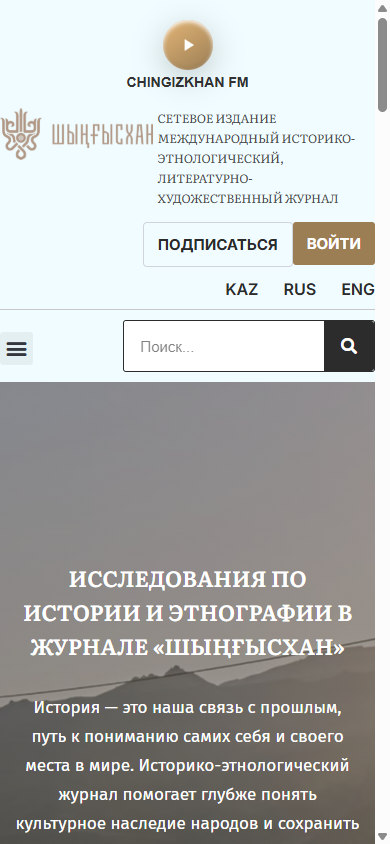
The home page and key internal pages, response statuses and redirects were verified.
Title, H1, description, canonical, Open Graph and JSON-LD were captured.
The technologies were verified through the names of public scripts, styles and API endpoints.
Homepage reviewed at 1440 × 1000 and 390 × 844.
The information model was validated against navigation, archives and the sitemap.
Every interface in this case study is an authentic project screenshot with no generated UI.
4 editorial categories and a WooCommerce environment. The solution can evolve as the content and new user journeys grow.
View Project ↗We will analyse the audiences, content, integrations and search demand, then design the structure and technical architecture before visual design begins.
Discuss the Project ↗Back to Case Studies