Positioning
Present the mission and areas of work without bureaucratic overload.
The «Baitaq-Bolashaq» public environmental association platform: mission, projects, environmental map, documents, events and press centre.
The website covers natural heritage preservation, ecosystem restoration, environmental awareness, the green economy and social modernization. Permanent organizational sections connect with news, events, documents, projects and a geographic eco-map.
Present the mission and areas of work without bureaucratic overload.
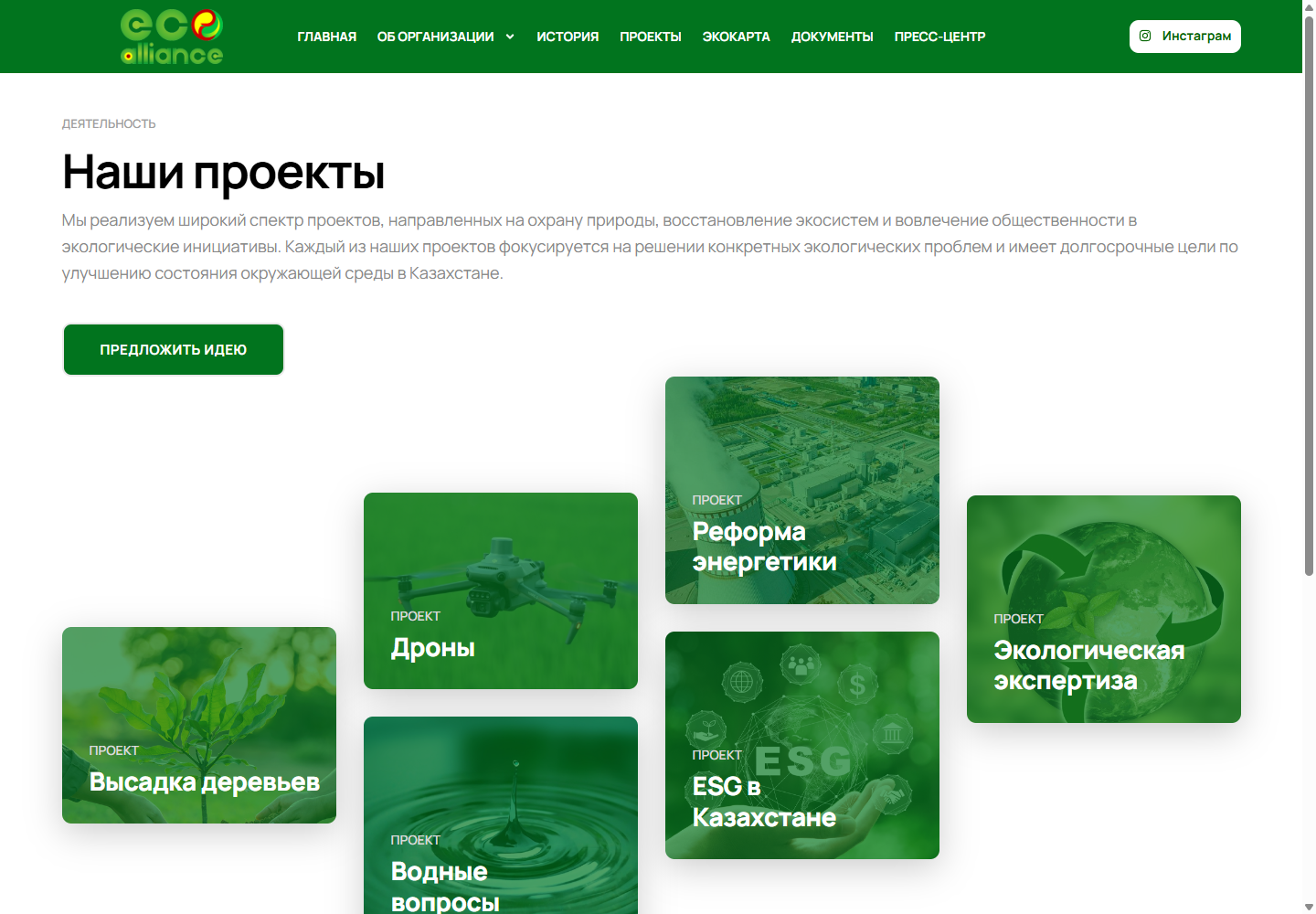
Bring initiatives and outcomes together in a dedicated catalog.
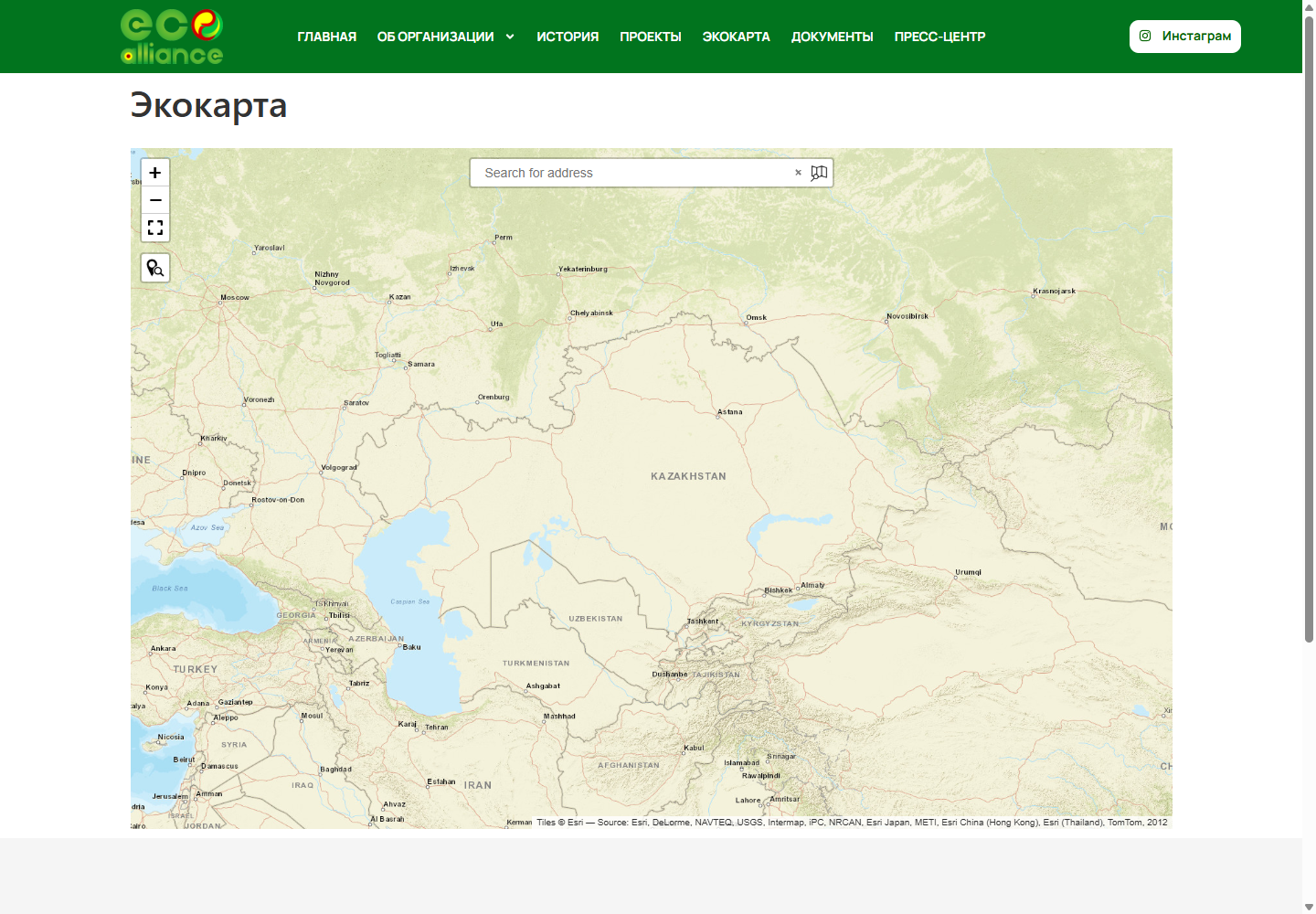
Show environmental sites and issues on a map.
Publish documents, history, governance and press materials.
The architecture was reconstructed from public navigation, internal links and accessible routes.
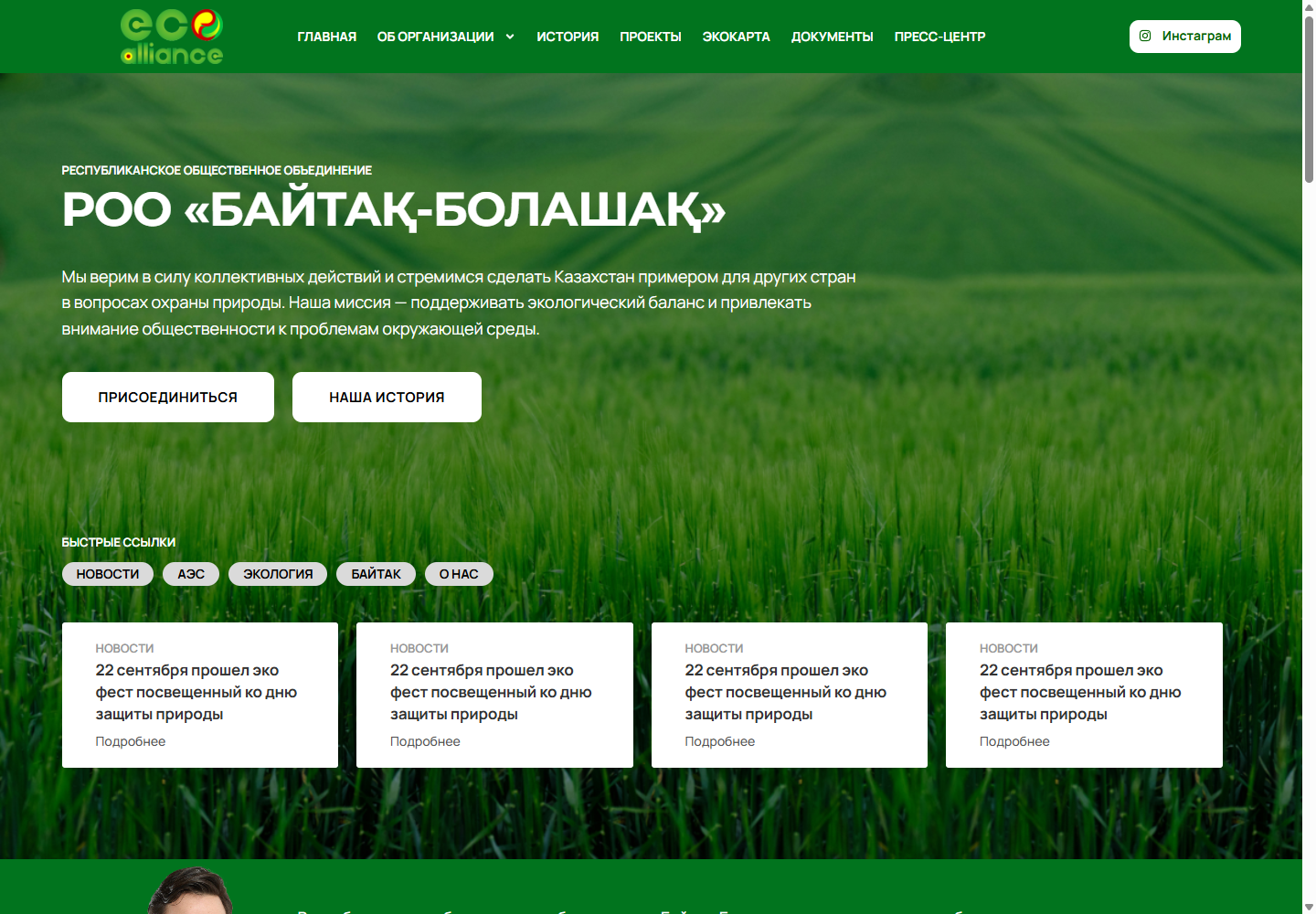
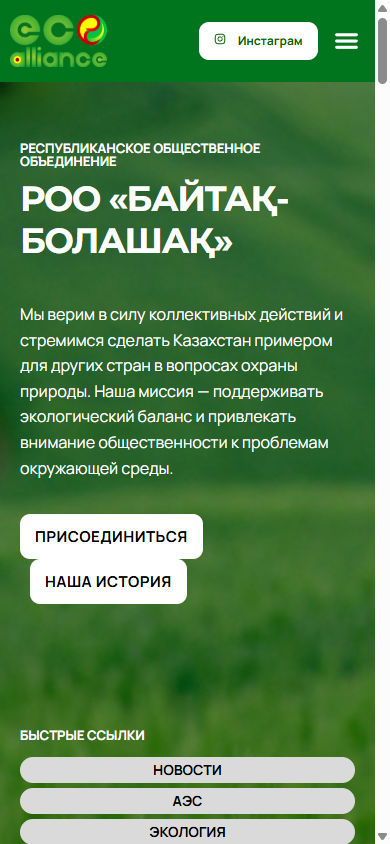
The opening screen states the public mission and immediately invites visitors to join or explore the organization's history. Quick links highlight current topics, cards support the news feed, the project catalog demonstrates practical work, and the eco-map offers geographic exploration.
Charter, leadership, history and key dates
Chronological Environmental Agenda
Standalone Project Pages
Geographic Data Visualization
Corporate and Operational Documents
Reusable Project Template Data
Explore Sites by Geography
Explore Initiatives
Dynamic Publication Feed
Contact and Join the Organization
The homepage includes a canonical URL but does not publish a description, Open Graph, JSON-LD or hreflang. The core sitemap works and contains four sections: posts, pages, categories and authors. Useful improvements for the public platform include Organization, Project, Article, Event and Place schema, unique project descriptions and indexable eco-map location profiles.
The public audit was completed on 10.09.2026. The case study describes the interface and content architecture without attributing unverified environmental impact or quantitative project outcomes to the website.
Navigation, headings, cards and calls to action are reorganised into a single vertical flow. The mobile screen below is an authentic capture of the original interface at a width of 390 px.
The home page and key internal pages, response statuses and redirects were verified.
Title, H1, description, canonical, Open Graph and JSON-LD were captured.
The technologies were verified through the names of public scripts, styles and API endpoints.
Homepage reviewed at 1440 × 1000 and 390 × 844.
The information model was validated against navigation, archives and the sitemap.
Every interface in this case study is an authentic project screenshot with no generated UI.
4 sitemap sections and 21 internal routes from the home page. The solution can evolve as the content and new user journeys grow.
View Project ↗We will analyse the audiences, content, integrations and search demand, then design the structure and technical architecture before visual design begins.
Discuss the Project ↗Back to Case Studies