Editorial Speed
Publish and rearrange news without developer involvement.
A news agency with a round-the-clock news feed, topic-based categories, two languages and an editorial system designed for high-frequency publishing.
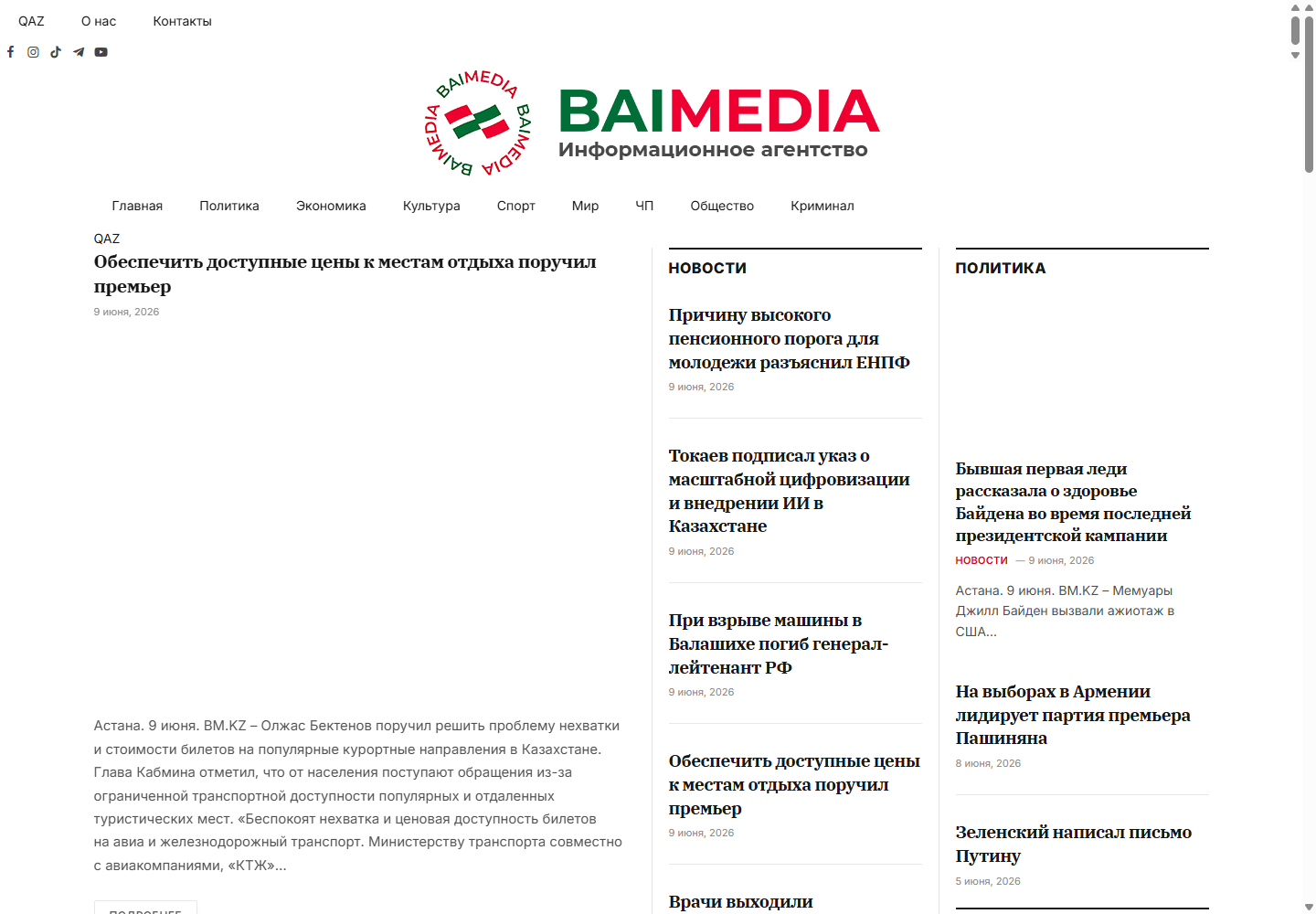
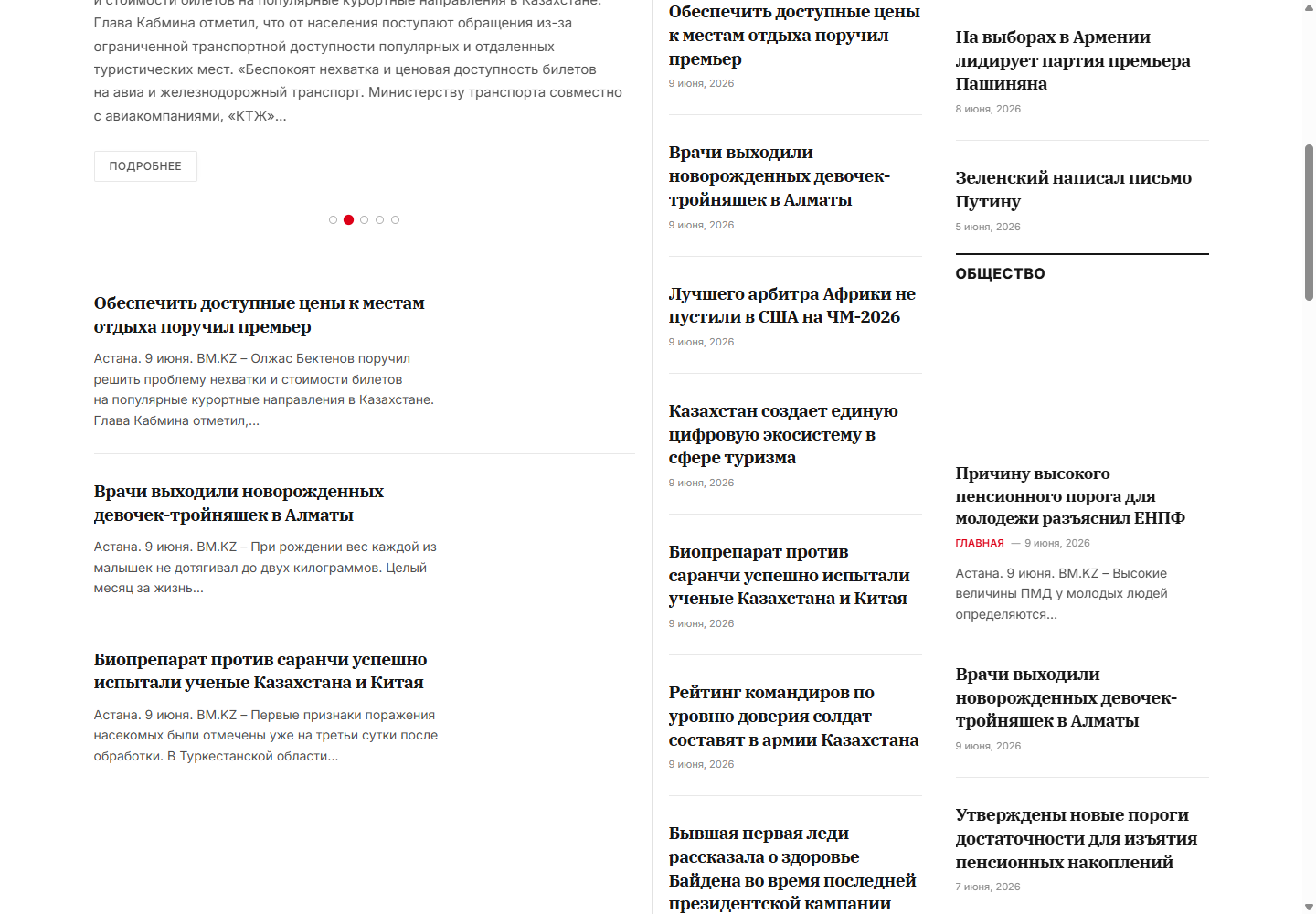
The agency covers politics, economics, culture, sport, world events, incidents, society and crime. The homepage acts as a continuously updated editorial layout, placing a lead story alongside topic columns, while section archives provide extensive feeds.
Publish and rearrange news without developer involvement.
Separate the lead story from the brief news feed and topic blocks.
Keep all eight sections accessible from every article.
Support separate Russian and Kazakh editorial workflows.
The architecture was reconstructed from public navigation, internal links and accessible routes.
The homepage uses a hierarchy of headings and columns so readers can distinguish the lead story, latest updates and individual sections. Category pages narrow the feed to one topic, while articles preserve context through dates, authors and related publications.
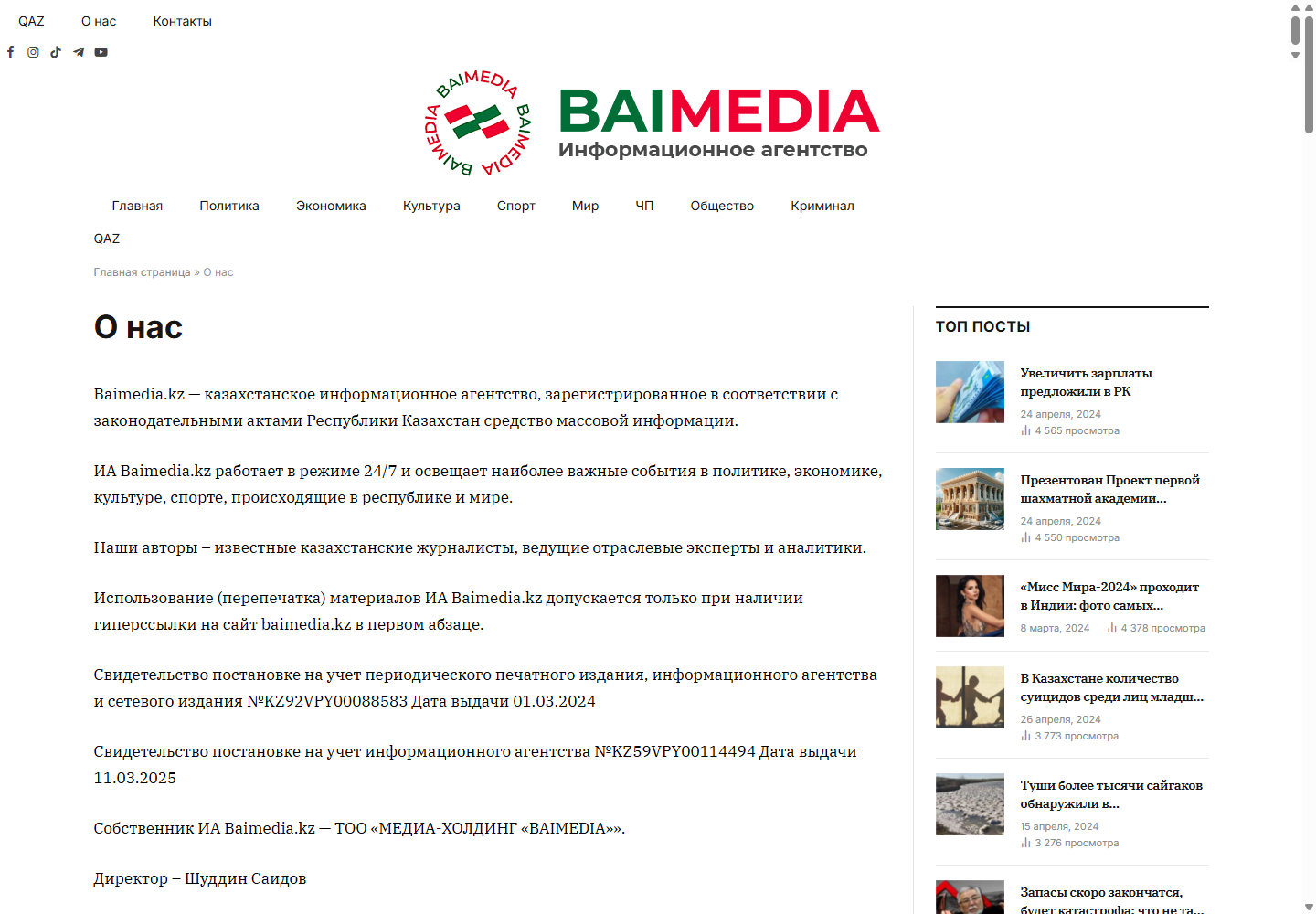
Title, Date, Author, Image, and Text
Politics, economy, culture, sport and more
Lead story, feeds and curated topic collections
Separate Editorial Branches
Access to Older Publications
GA and Yandex Metrica in Public Code
Full-Text Archive Search
Continuous Thematic Feeds
Content Distribution on Social Media
Column Reflow on Mobile
The archived version includes a description, canonical URL, Open Graph and one JSON-LD block. Categories create independent search archives. A news resource needs NewsArticle schema, accurate modified/published dates, author pages, an XML News Sitemap and duplicate control across its two language branches.
On 09.09.2026, the live domain returned a 503 ‘Hosting disabled’ response. The real interfaces shown in this case study were captured from Wayback Machine snapshots dated 07–09.06.2026. This is explicitly disclosed to reflect the project's current status accurately.
Navigation, headings, cards and calls to action are reorganised into a single vertical flow. The mobile screen below is an authentic capture of the original interface at a width of 390 px.
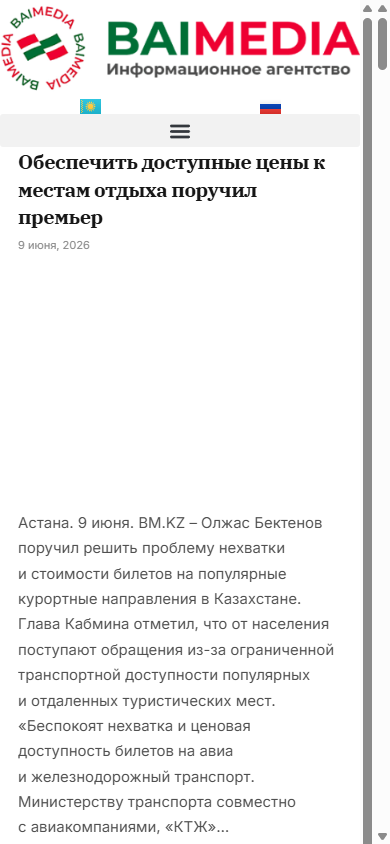
The home page and key internal pages, response statuses and redirects were verified.
Title, H1, description, canonical, Open Graph and JSON-LD were captured.
The technologies were verified through the names of public scripts, styles and API endpoints.
Homepage reviewed at 1440 × 1000 and 390 × 844.
The information model was validated against navigation, archives and the sitemap.
Every interface in this case study is an authentic project screenshot with no generated UI.
8 main categories and 24/7 publishing. The solution can evolve as the content and new user journeys grow.
View Project ↗We will analyse the audiences, content, integrations and search demand, then design the structure and technical architecture before visual design begins.
Discuss the Project ↗Back to Case Studies