
Geography
Connect districts and points of interest to informative cards.
A literary and cultural map of the Abai Region: geography, encyclopaedic content, notable figures and the region's visual heritage in one digital system.
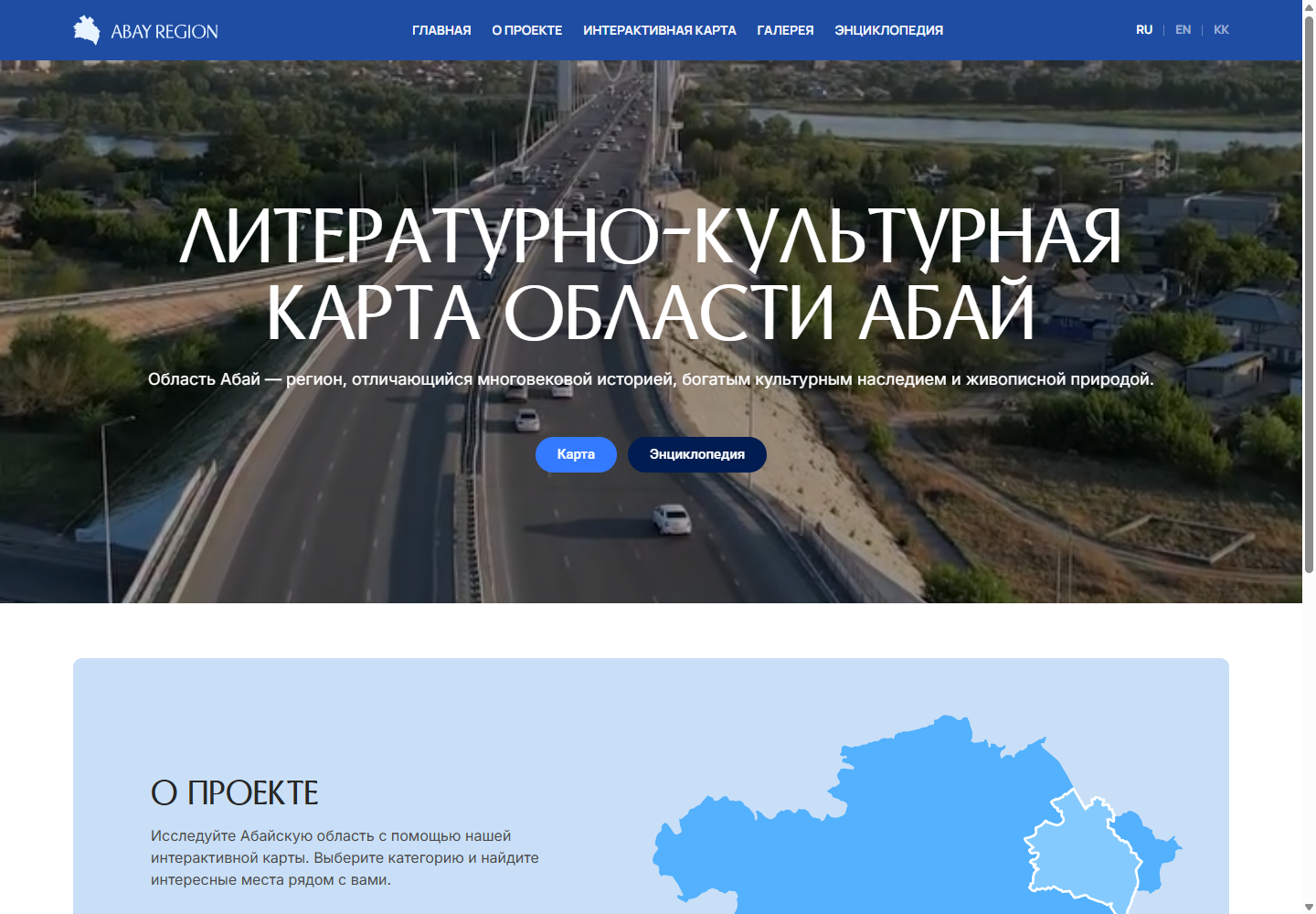
The platform serves residents, tourists, school pupils, university students and researchers. Users can start with the map, open a district profile, explore a related person in the encyclopedia and continue through the gallery. A connected information model therefore forms the basis of the solution.
Connect districts and points of interest to informative cards.
Separate biographies, places and visual materials while preserving their relationships.
Provide equivalent navigation in Russian, Kazakh and English.
Let the team expand the database without changing templates.
The architecture was reconstructed from public navigation, internal links and accessible routes.
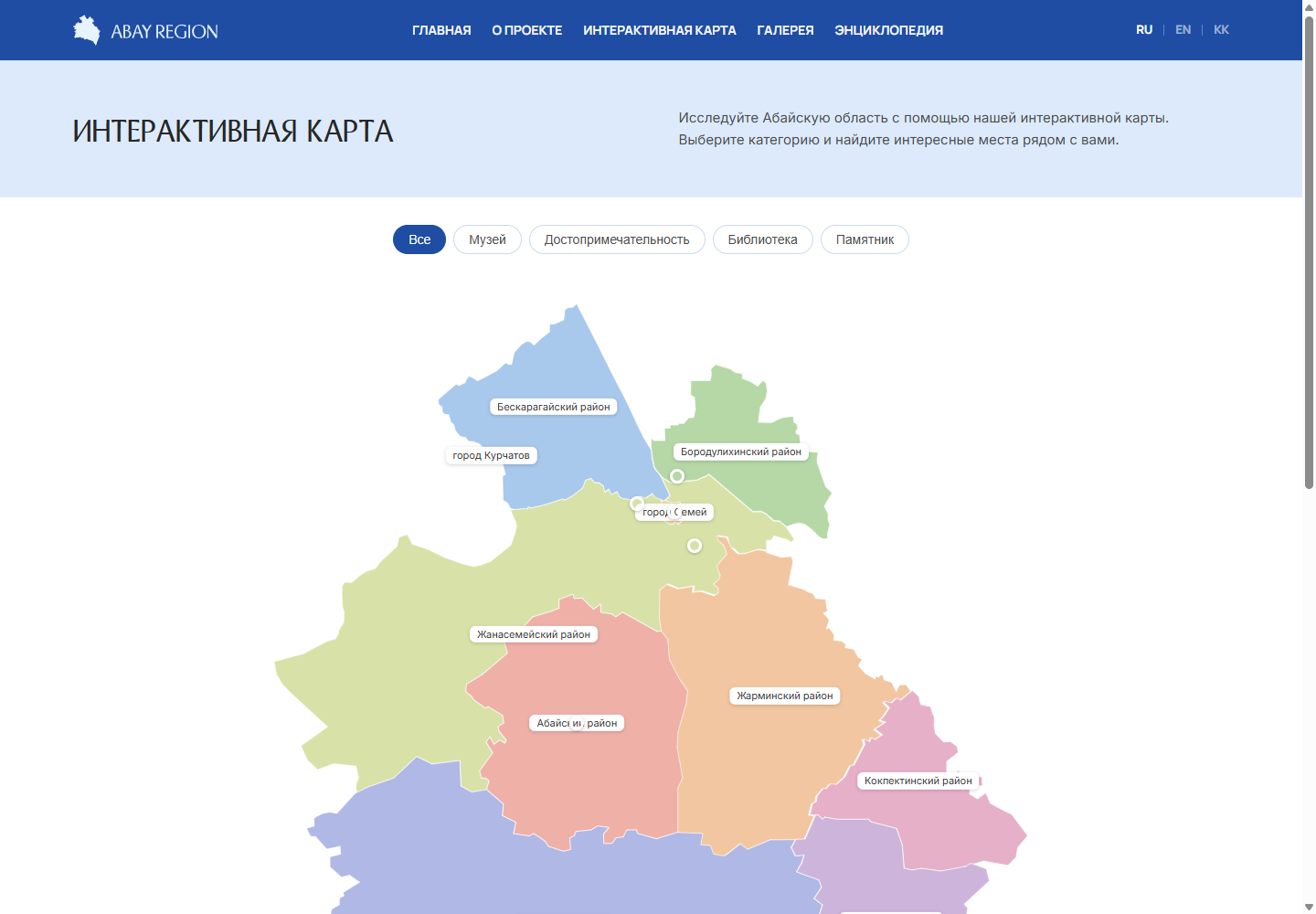
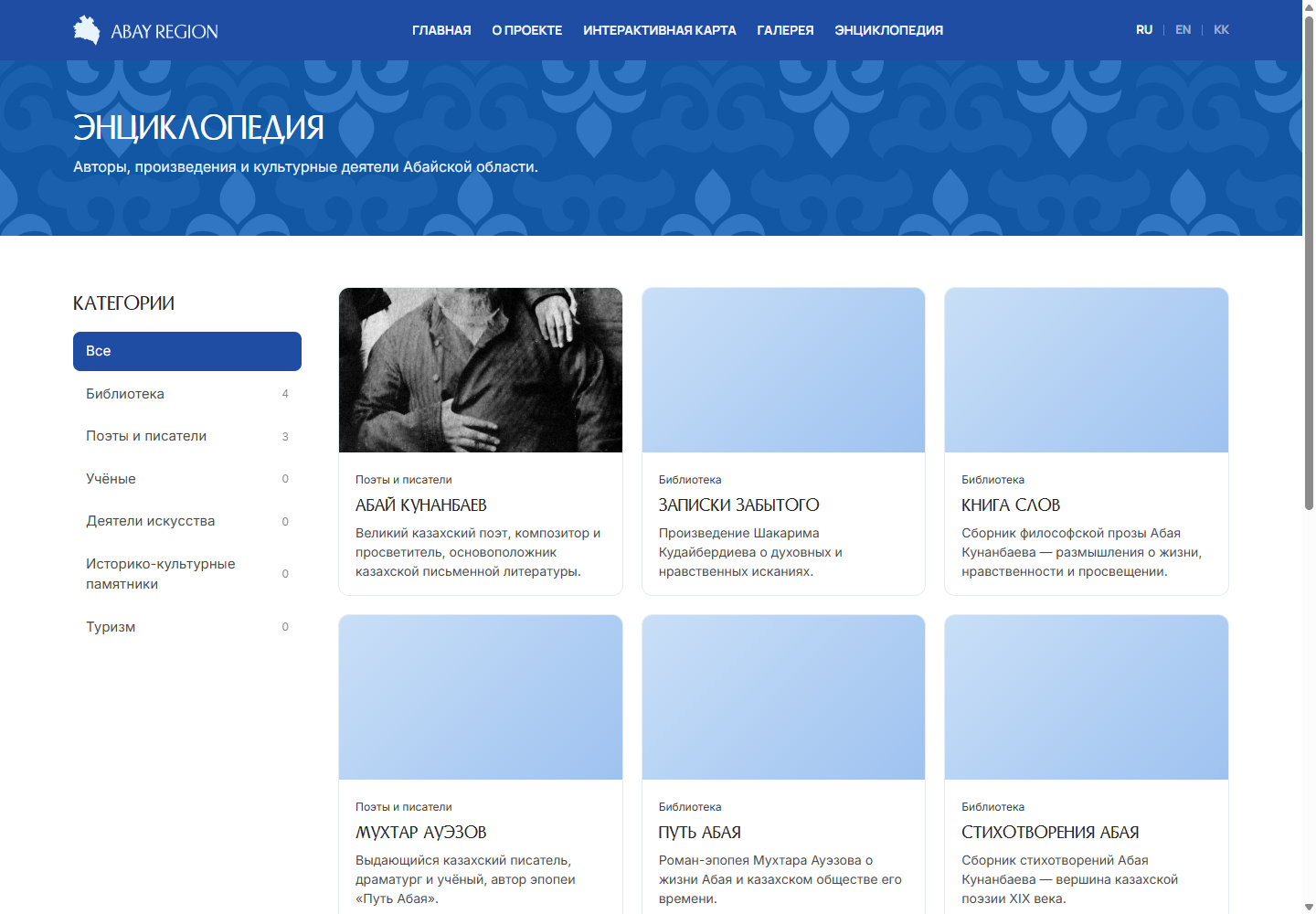
On a dedicated screen, users select a territory and discover its context. The encyclopedia supports exploration by topic, while concise navigation connects the project's five main areas. On mobile, the same journeys follow a sequential flow.
Coordinates and Location Card
Geography, History, and Related Content
People and Thematic Categories
Images and Visual Archive Categories
About the Project, Map, and System Content
Encyclopedia and Gallery Categories
Select a Territory and Navigate to a District
Encyclopedia and Gallery Filtering
Navigate from Overview to Detailed Content
RU, KK, and EN in Global Navigation
WordPress publishes an index of 24 sitemaps, with separate maps for pages, districts, the encyclopedia, gallery, categories and authors across three language branches. During the audit, the homepage lacked a description, canonical URL, Open Graph and JSON-LD, identifying a concrete opportunity to improve organic visibility.
Technical indicators and SEO fields were obtained from public HTML, the REST API and sitemap on 09.09.2026. The case study makes no claims about internal KPIs that cannot be verified publicly.
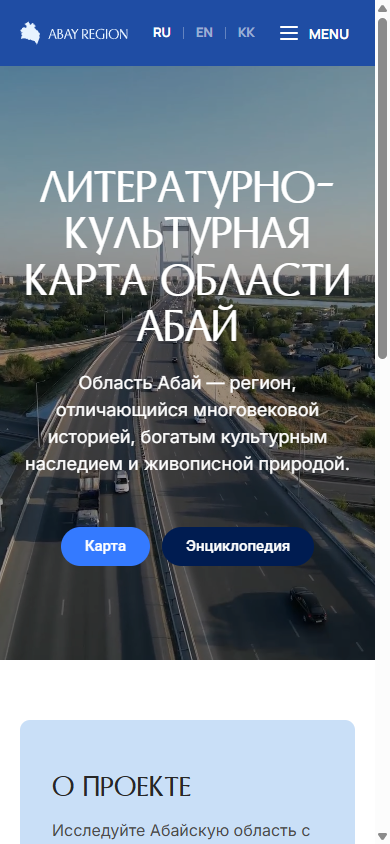
Navigation, headings, cards and calls to action are reorganised into a single vertical flow. The mobile screen below is an authentic capture of the original interface at a width of 390 px.
The home page and key internal pages, response statuses and redirects were verified.
Title, H1, description, canonical, Open Graph and JSON-LD were captured.
The technologies were verified through the names of public scripts, styles and API endpoints.
Homepage reviewed at 1440 × 1000 and 390 × 844.
The information model was validated against navigation, archives and the sitemap.
Every interface in this case study is an authentic project screenshot with no generated UI.
24 sitemap sections and 4 domain-specific content types. The solution can evolve as the content and new user journeys grow.
View Project ↗We will analyse the audiences, content, integrations and search demand, then design the structure and technical architecture before visual design begins.
Discuss the Project ↗Back to Case Studies